KhetiVidyaहिंदी
All crops

Cereal · Poaceae (grass family)

Wheat

Gehun · गेहूं · Triticum aestivum

The king of the rabi season — roti for the whole country.

Wheat is the main winter crop of North India and the base of our daily roti. Cool nights at sowing, mild days during growth and a slow, cool grain-filling period give the best harvest. Most wheat follows rice, so how you handle paddy straw and how early you sow decide much of the yield.

Sowing
25 Oct – 20 Nov
Harvest
1 Apr – 30 Apr
Duration
140–155 days
Yield
18–24 q/acre
45–60 q/ha
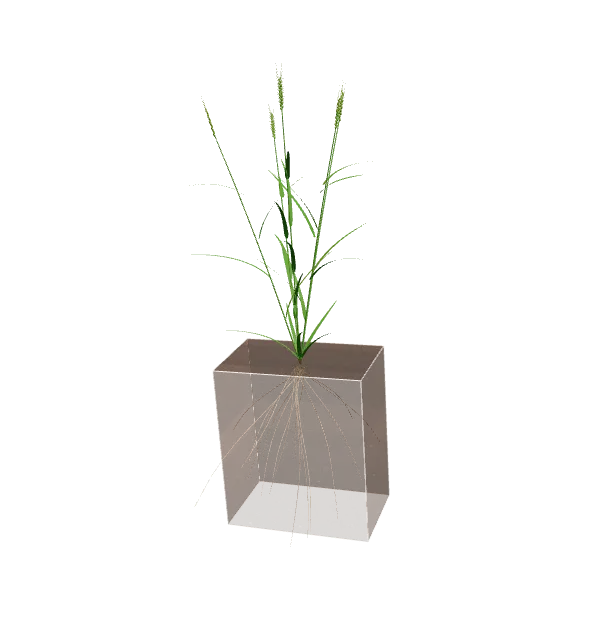
Wheat plant with its roots, in a glass tank

Grain filling (milk to dough) · roots shown through the soil

At a glance

Wheat in one look

Needs a cool winter. If day temperature crosses 30 °C during grain filling in March, grains shrivel and yield drops — the main reason late sowing hurts.

Sowing time

25 Oct – 20 Nov

Harvest

1 Apr – 30 Apr

140–155 days from sowing

Temperature

15–25 °C to grow

18–22 °C at sowing

Soil

Loam to clay loam; sandy loam also works with good irrigation and manure

pH 6–8

Seed rate

40–51 kg/acre

100–125 kg/ha

Spacing

20 cm rows

4–5 cm deep

Irrigations

4–6

6 critical stages

Yield

18–24 q/acre

45–60 q/ha

Season

AugSepOctNovDecJanFebMarAprMayJun
Grown most inPunjabHaryanaUttar PradeshMadhya PradeshRajasthanBiharUttarakhandDelhi

Avoid waterlogged and strongly saline or sodic fields. Laser-levelled land saves water and gives even germination.

Seed to harvest

Watch wheat grow, stage by stage

Scroll through the season. The plant in the glass tank grows to each stage — roots and all — and every card says what the crop is doing and what you should do in the field that week.

Wheat plant with its roots, in a glass tank

Stage 1 of 8

Sowing

Day 0–4

  1. 1Day 0–4

    Sowing

    The seed absorbs water from moist soil and swells. Inside, it wakes up and starts using its stored food.

    Your job · Sow on time in moist soil at 4–5 cm depth with treated seed and basal fertiliser in the rows.

  2. 2Day 5–10

    Germination and emergence

    Seminal roots push down, and a pointed sheath (coleoptile) pushes up through the soil. The first leaf opens above ground.

    Your job · Check for even germination. Gaps of more than a foot can be filled by re-sowing quickly.

  3. 3Day 11–25

    Seedling and crown roots (CRI)

    Three to four leaves form. Around day 20, crown roots begin at the base — these roots feed the plant for the rest of its life.

    Your job · Give the first irrigation at 20–25 days with the second dose of nitrogen. This is the most important irrigation.

  4. 4Day 26–50

    Tillering

    Side shoots (tillers) come out from the base. More healthy tillers mean more ears later.

    Your job · Spray herbicide at 30–35 days if weeds are present. Give the second irrigation and last nitrogen dose around 40–45 days.

  5. 5Day 51–75

    Jointing (stem elongation)

    Nodes become visible and stems grow tall quickly. The young ear is developing hidden inside the stem.

    Your job · Irrigate around 60–65 days. Watch for yellow rust stripes and aphids every week.

  6. 6Day 76–95

    Heading and flowering

    Ears come out of the flag-leaf sheath and tiny yellow anthers hang out as the florets flower and set grain.

    Your job · Irrigate at flowering, but not on windy days. Pull out loose smut plants in bags. Protect the flag leaf from rust.

  7. 7Day 96–125

    Grain filling (milk to dough)

    Grains fill with milky liquid, then turn doughy and firm. The flag leaf feeds most of the grain.

    Your job · Give light irrigations at milk and dough stage, especially if it turns hot. Avoid irrigation in strong wind.

  8. 8Day 126–150

    Maturity and harvest

    Leaves, stem and ears turn golden. Grains become hard and the stalk under the ear dries.

    Your job · Harvest when grains are hard and can't be cut with a fingernail. Arrange combine or reaper and plan straw (bhusa) collection.

The seed

Good seed is half the harvest

Use certified seed of a variety bred for your region, at the right rate, and treat it before sowing.

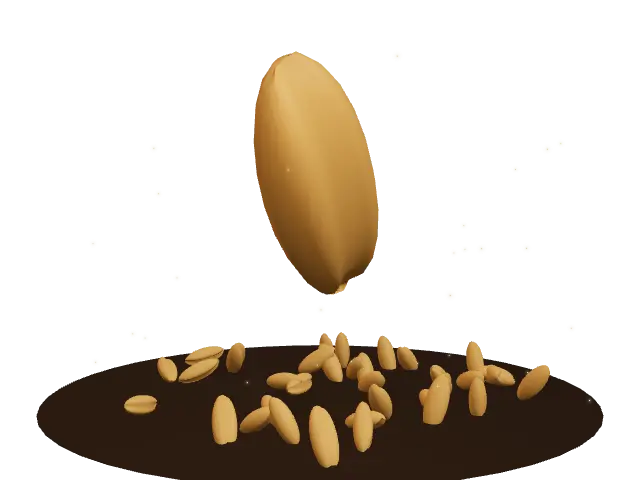
Wheat seeds, close up

One grain

≈ 6.5 mm

Seed rate

40–51 kg/acre

100–125 kg/ha

1000-seed weight

40 g

Recommended varieties

HD 3086 (Pusa Gautami)High-yielding, rust-resistant variety for timely sown irrigated fields of the north-western plains.
DBW 187 (Karan Vandana)High yield in both north-western and north-eastern plains; good rust resistance.
DBW 303 (Karan Vaishnavi)For early sowing (late October) under high fertility; very high yield potential.
PBW 826PAU variety for timely sowing in Punjab and neighbouring states; strong yield and rust resistance.
HD 3226 (Pusa Yashasvi)Resistant to yellow and brown rust; good chapati quality.
DBW 222 (Karan Narendra)Timely sown irrigated variety; stands well against lodging.

Seed treatment

  1. 1Use certified seed; if using your own seed, clean it and remove shrivelled and broken grains.
  2. 2Treat seed with a carboxin + thiram or tebuconazole seed dressing against loose smut and other seed-borne diseases, as per label / your KVK.
  3. 3In termite-prone light soils, use a recommended insecticidal seed dressing (such as fipronil or imidacloprid), as per label / your KVK.
  4. 4Azotobacter or PSB culture can be applied after the fungicide, just before sowing.

Field & sowing

Prepare the land, then sow at the right gap and depth

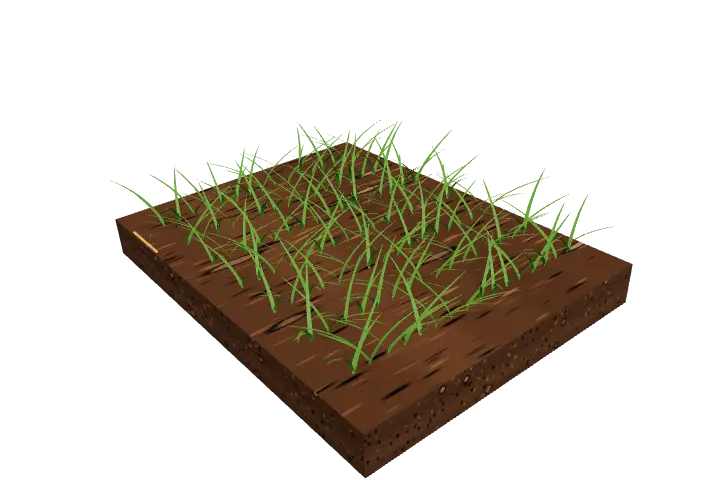
Line sowing with a seed drill, zero-till drill or Happy Seeder

A Wheat field, showing rows and spacing

Layout

Flat beds

Row to row

20 cm

Plant to plant

—

Depth

4–5 cm

Land preparation

  1. 1Do not burn paddy straw — manage it with a Happy Seeder, Super Seeder or by mixing it into the soil.
  2. 2If the field is dry, give a pre-sowing irrigation (rauni) and wait for workable moisture.
  3. 3For conventional sowing, 2–3 harrowings followed by planking give a fine, firm seedbed.
  4. 4Laser levelling once every few years saves 20–25 % irrigation water and gives even growth.

Sowing, step by step

  1. 1Sow when the soil has good moisture (wattar) — not too wet, not dry.
  2. 2Use a seed-cum-fertiliser drill so seed and fertiliser go in rows 20–22.5 cm apart.
  3. 3Keep seed 4–5 cm deep; deeper sowing weakens seedlings, shallow sowing invites birds and drying.
  4. 4After rice, a Happy Seeder or zero-till drill sows directly into the stubble without burning straw.
  5. 5Raise seed rate to 125 kg/ha if sowing after 25 November.

Feeding the crop

How much fertiliser, and when

These are the standard doses for a medium-fertility field. Your Soil Health Card can raise or lower them — test first, then feed.

Nutrient dose

Nitrogen (N)61 kg/acre · 150 kg/ha
Phosphorus (P₂O₅)24 kg/acre · 60 kg/ha
Potassium (K₂O)16 kg/acre · 40 kg/ha

Plus 10 t/ha (4 t/acre) of well-rotted farmyard manure or compost.

When to apply

  1. 1Adjust doses to your Soil Health Card — this is the general recommendation for timely sown irrigated wheat.
  2. 2At sowing: full phosphorus and potash plus one-third of the nitrogen, drilled with the seed.
  3. 3One-third nitrogen with the first irrigation (crown root stage, about 21 days).
  4. 4Last one-third nitrogen with the second irrigation (about 40–45 days). Do not apply urea after the jointing stage.

Micronutrients, sulphur & biofertilisers

  1. 1On zinc-deficient soils apply 25 kg/ha zinc sulphate (heptahydrate) at sowing.
  2. 2On light soils after rice, watch for manganese deficiency (grey-pink streaks on middle leaves) — spray manganese sulphate as advised by your KVK, starting before the first irrigation.
  3. 3If the soil is low in sulphur, use single super phosphate or gypsum as the phosphorus/sulphur source.

Bags for your field

For 1 acre of Wheat

What to buy

Urea

2.5

bags · 111 kg

DAP

1

bag · 53 kg

MOP

0.5

bags · 27 kg

Nutrients in it: N 61 kg · P₂O₅ 24 kg · K₂O 16 kg

Also add farmyard manure or compost: 4 t

  • Don't put it all in at once: follow the timing on the Wheat page.
  • Your Soil Health Card can raise or lower these amounts. If you have one, follow it.
  • Using SSP, NPK complexes or gypsum instead changes these amounts; the nutrient dose is what matters.

Not yet checked against a package of practices. Confirm the dose with your KVK before you buy.

Urea has 46 % N; DAP 18 % N and 46 % P₂O₅; MOP 60 % K₂O. Urea comes in 45 kg bags, DAP and MOP in 50 kg.

Water

4–6 irrigations — never miss the critical ones

A crop forgives a late irrigation at some stages and punishes it at others. These are the days that decide yield.

Day 21
Day 42
Day 63
Day 84
Day 102
Day 118
SowingDay 155

Critical irrigations

  1. Day 21Crown root initiation (CRI) — most critical
  2. Day 42Tillering
  3. Day 63Late jointing
  4. Day 84Flowering
  5. Day 102Milk stage
  6. Day 118Dough stage

Watering tips

  1. 1Never miss the first irrigation at 20–25 days — missing CRI can cut yield badly.
  2. 2If water allows only a few irrigations, give them at CRI, jointing and flowering.
  3. 3Use light irrigations (about 6–7 cm); heavy flooding wastes water and causes yellowing.
  4. 4Do not irrigate on windy days after heading — wet, heavy plants lodge.

Protection

Weeds, pests and diseases to watch for

Walk the field every week. Most problems are cheap to stop early and expensive to fix late. For any spray, follow the label dose and check with your KVK.

Disease

Yellow and brown rust

Signs · Yellow powdery stripes on leaves in cool, humid January–February (yellow rust); scattered orange-brown powdery spots later in February–March (brown rust). Powder rubs off on your fingers.

Manage · Grow resistant varieties and avoid excess nitrogen. Check the crop weekly from mid-December, especially near tree lines. At first appearance spray propiconazole 25 EC (0.1 %) or another recommended fungicide, as per label / your KVK.

Disease

Loose smut

Signs · At heading, the whole ear turns into black powder instead of grain; only a bare stalk remains after the powder blows away.

Manage · Use treated certified seed. Pull out affected plants carefully in a cloth bag before the powder spreads and destroy them.

Disease

Karnal bunt

Signs · Some grains are partly black and give a rotten-fish smell when crushed. Seen after harvest.

Manage · Grow tolerant varieties, avoid heavy irrigation at ear emergence in humid weather and do not use infected grain as seed. A recommended fungicide at ear emergence helps in risky areas, as per label / your KVK.

Pest

Termites (deemak)

Signs · Plants dry up in patches and pull out easily; roots and lower stem are eaten. Worse in light, dry soils.

Manage · Use only well-rotted manure, keep irrigation timely and treat seed in termite-prone fields. Standing-crop treatment only on KVK advice, as per label / your KVK.

Pest

Aphids (chepa / tela)

Signs · Clusters of tiny green insects on leaves and ears from January to March; sticky honeydew and sooty black growth.

Manage · Ladybird beetles usually control them — don't spray early. Spray only if numbers cross about 5 aphids per ear, with a recommended insecticide such as imidacloprid or thiamethoxam, as per label / your KVK.

Disorder

Manganese deficiency

Signs · On sandy soils after rice, middle leaves show grey-pink to pale streaks between veins and plants look weak, usually before the first irrigation.

Manage · Spray manganese sulphate solution as advised by your KVK, repeating at weekly intervals on sunny days. Grow wheat on such fields with a pre-sowing irrigation and timely sowing.

Disorder

Terminal heat and lodging

Signs · Late-sown crops face heat above 30 °C in March: grains stay small and shrivelled. Heavy, over-fertilised crops fall flat (lodge) after wind and irrigation.

Manage · Sow on time, use the right variety, give a light irrigation if a heat wave comes during grain filling, avoid excess nitrogen and don't irrigate on windy days.

Weeds

Common · Gulli danda / mandoosi (Phalaris minor), wild oat (jangli jai), bathua, senji, krishna neel, hirankhuri

  1. 1Use clean, weed-free seed and keep bunds and channels clean.
  2. 2Zero-till sowing and Happy Seeder mulch reduce gulli danda emergence.
  3. 3If weeds are heavy, spray a recommended herbicide 30–35 days after sowing (just after the first irrigation): for grassy weeds clodinafop, pinoxaden or sulfosulfuron; for broadleaf weeds metsulfuron or 2,4-D — as per label / your KVK.
  4. 4Rotate herbicides every season — gulli danda has become resistant to several chemicals in Punjab and Haryana.

Harvest

Harvest on time, dry it well, store it safe

A good crop gives

18–24q/acre

45–60 quintal per hectare

Plus about the same weight of straw (bhusa) for cattle.

When is it ready?

  1. 1Whole plant turns golden yellow and the stalk just below the ear dries.
  2. 2Grain is hard and does not dent when pressed with a fingernail.
  3. 3Grain moisture falls to about 15–20 % in the field.

Harvesting

  1. 1Combine harvest when grain is hard and dry; use a straw reaper afterwards to make bhusa.
  2. 2For manual harvesting, cut with a sickle, dry the bundles a few days and thresh with a thresher.
  3. 3Do not burn the leftover stubble — it can be mixed into the soil for the next crop.

After harvest & storage

  1. 1Dry grain in the sun to about 10–12 % moisture before storing.
  2. 2Store in clean, dry metal bins, Pusa bins or bags on wooden planks, away from walls.
  3. 3Protect against khapra beetle, lesser grain borer and rice weevil — clean and fumigate godowns before filling (only by trained people).
  4. 4Keep seed grain separately; treat it before next season's sowing.

Golden rules for wheat

  1. 1Sow between 25 October and 15–20 November — every week of delay after that steadily cuts yield.
  2. 2Never burn paddy straw; sow with a Happy Seeder or Super Seeder instead.
  3. 3The first irrigation at crown root stage (20–25 days) is the one you must never miss.
  4. 4Rotate herbicides to keep gulli danda from becoming resistant.
  5. 5Check for yellow rust weekly in January–February and spray only when you see it.