Disease
Yellow rust
Signs · Yellow powdery stripes on leaves in cool, humid weather from January.
Manage · Grow resistant varieties. At first appearance spray propiconazole or another recommended fungicide, as per label / your KVK.
Cereal · Poaceae (grass family)
Jau · जौ · Hordeum vulgare
Hardy grain for saline soils and short water — and the base of malt.
Barley needs less water and fertiliser than wheat and tolerates saline and alkaline soils better. It is grown for food, cattle feed and malt for industry. In Rajasthan, Haryana and Uttar Pradesh it does well on fields where wheat struggles.
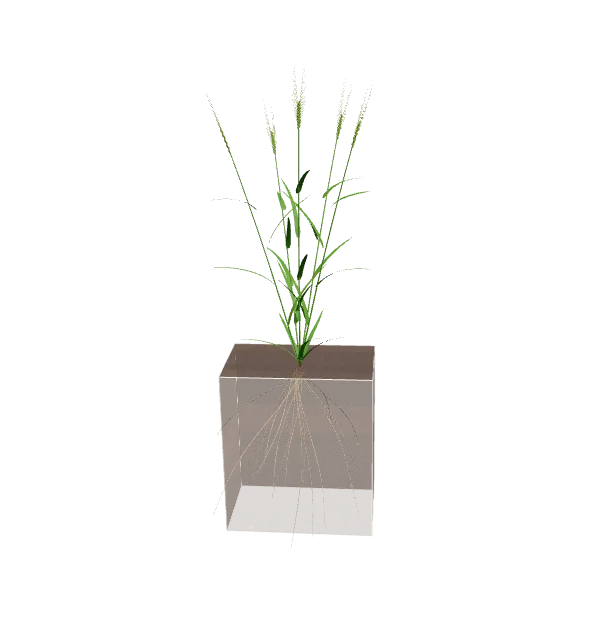
Grain filling · roots shown through the soil
At a glance
Likes cool, dry weather. More tolerant of drought and mild salinity than wheat, but frost at flowering and hot winds at grain filling still hurt.
Sowing time
25 Oct – 20 Nov
Harvest
25 Mar – 20 Apr
120–135 days from sowing
Temperature
12–25 °C to grow
18–22 °C at sowing
Soil
Sandy loam to loam; grows on light soils too
pH 6.5–8.5
Seed rate
34–40 kg/acre
85–100 kg/ha
Spacing
22.5 cm rows
4–5 cm deep
Irrigations
2–4
3 critical stages
Yield
14–20 q/acre
35–50 q/ha
Season
Tolerates moderately saline and alkaline soils better than wheat. Avoid waterlogged fields.
Seed to harvest
Scroll through the season. The plant in the glass tank grows to each stage — roots and all — and every card says what the crop is doing and what you should do in the field that week.
Stage 1 of 8
Sowing
Day 0–4
Seed takes up moisture and swells.
Your job · Sow treated seed in moist soil, 4–5 cm deep, with basal fertiliser.
Roots push down and the first leaf breaks through the soil.
Your job · Check stand; re-sow large gaps quickly.
Three to four leaves form and crown roots begin.
Your job · Keep the field weed-free; plan the first irrigation.
Several side shoots form from the base.
Your job · First irrigation at about 30 days with the rest of the nitrogen. Hoe or spray for weeds.
Stems lengthen and the young ear grows inside.
Your job · Watch for yellow rust and aphids.
Long-awned ears come out and flower.
Your job · Irrigate at ear emergence. Remove smutted ears in a bag.
Grains fill from milky to doughy to firm.
Your job · One light irrigation at milk stage if the soil is dry.
The whole plant turns golden, awns become brittle and ears bend down.
Your job · Harvest promptly — over-dry ears break off and grains shatter.
The seed
Use certified seed of a variety bred for your region, at the right rate, and treat it before sowing.
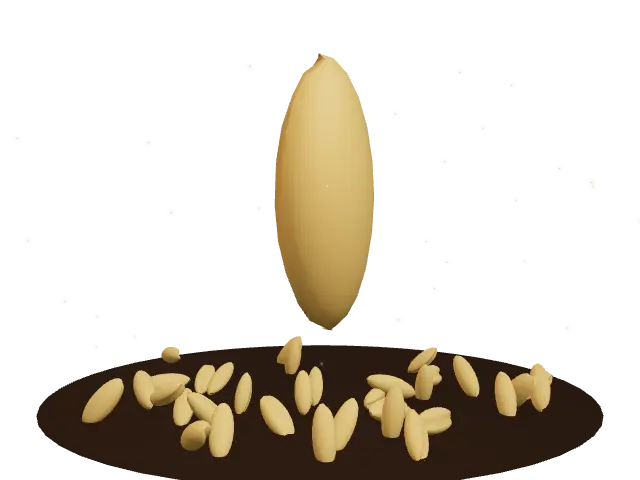
One grain
≈ 8 mm
Seed rate
34–40 kg/acre
85–100 kg/ha
1000-seed weight
—
Field & sowing
Line sowing with a seed drill
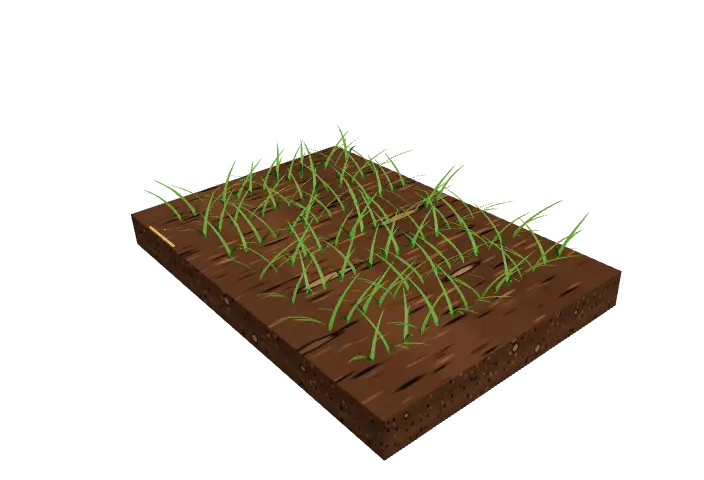
Layout
Flat beds
Row to row
22.5 cm
Plant to plant
—
Depth
4–5 cm
Feeding the crop
These are the standard doses for a medium-fertility field. Your Soil Health Card can raise or lower them — test first, then feed.
Nutrient dose
Plus 8 t/ha (3.2 t/acre) of well-rotted farmyard manure or compost.
For 1 acre of Barley
What to buy
Urea
1
bag · 42 kg
DAP
0.5
bags · 26 kg
MOP
0.5
bags · 13 kg
Nutrients in it: N 24 kg · P₂O₅ 12 kg · K₂O 8.1 kg
Also add farmyard manure or compost: 3.2 t
Not yet checked against a package of practices. Confirm the dose with your KVK before you buy.
Urea has 46 % N; DAP 18 % N and 46 % P₂O₅; MOP 60 % K₂O. Urea comes in 45 kg bags, DAP and MOP in 50 kg.
Water
A crop forgives a late irrigation at some stages and punishes it at others. These are the days that decide yield.
Protection
Walk the field every week. Most problems are cheap to stop early and expensive to fix late. For any spray, follow the label dose and check with your KVK.
Signs · Yellow powdery stripes on leaves in cool, humid weather from January.
Manage · Grow resistant varieties. At first appearance spray propiconazole or another recommended fungicide, as per label / your KVK.
Signs · Long yellow then brown stripes along leaves; leaves split and plants stay stunted with poor ears. Spread through seed.
Manage · Use treated, certified seed and pull out early affected plants.
Signs · Ears filled with black spore masses — held inside a membrane in covered smut, blown away as loose powder in loose smut.
Manage · Seed treatment with a systemic fungicide; remove smutted ears in a bag before they burst.
Signs · Brown spots or net-like brown patterns on leaves that join and dry the leaf, mostly in humid spells.
Manage · Use resistant varieties and clean seed; spray a recommended fungicide such as propiconazole if it spreads fast, as per label / your KVK.
Signs · Green aphid colonies on leaves and ears in January–March with sticky honeydew.
Manage · Natural enemies usually manage them. Spray a recommended insecticide only if colonies are heavy on the ears, as per label / your KVK.
Signs · Plants dry in patches in light soils and pull out easily with eaten roots.
Manage · Use rotted manure only, irrigate on time and treat seed in termite-prone fields.
Common · Gulli danda (Phalaris minor), wild oat, bathua, senji, krishna neel
Harvest
A good crop gives
14–20q/acre
35–50 quintal per hectare
Straw is a useful cattle feed.