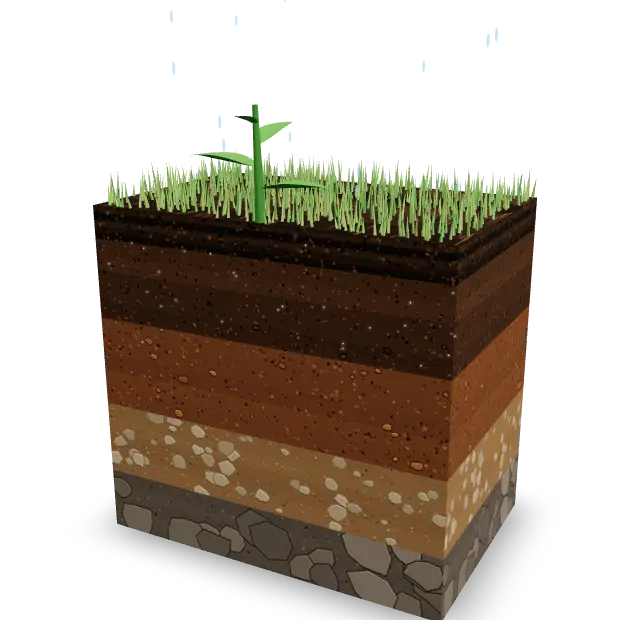

Topsoil
5–25 cm deep
The richest, most alive layer — minerals mixed with humus. Most roots and soil creatures live here.
Why it matters · Your crop takes most of its water and food from these few centimetres.
Section 01 · Soil
Under every crop is a thin, living layer that took centuries to form. Here is what it is made of, what it needs to stay healthy and why it matters more than anything else on the farm.

What healthy soil needs
Good soil is a balance. Get these right and crops grow strong with less fertiliser, less water and fewer pests.
What soil is made of
A handful of good soil is about 45 % minerals and 5 % organic matter. The other half is pore space shared by water and air. Hover or tap a part to see what it does.

100%
healthy soil
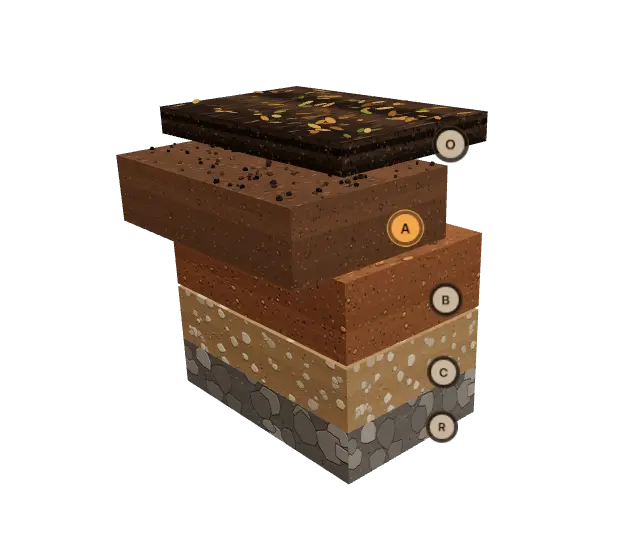
Layers under your feet
Scientists call these layers horizons. The top 25 cm does most of the work — and it is the part that washes away first. Tap a layer to look closer.

5–25 cm deep
The richest, most alive layer — minerals mixed with humus. Most roots and soil creatures live here.
Why it matters · Your crop takes most of its water and food from these few centimetres.
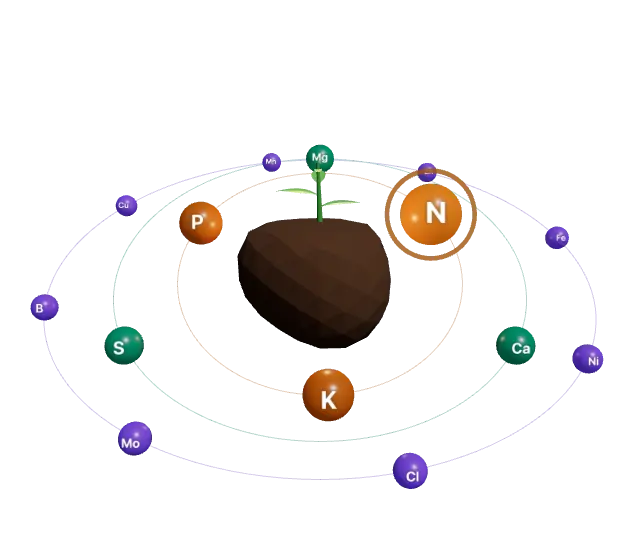
Food for the crop
Carbon, hydrogen and oxygen come from air and water. Everything else the roots must find in the soil — and the scarcest one limits the whole harvest, no matter how much of the rest you add. Tap an element.

Primary nutrient
Primary · Needed in the largest amounts
Secondary · Needed in moderate amounts
Micronutrients · Tiny amounts — but just as essential
Soil pH
Nutrients can be in the soil and still out of reach. pH decides which ones the roots can actually take up. Slide to see how acidity changes what your crop can eat.
Your soil pH
6.8
Neutral — the sweet spot
Almost every nutrient is available. Most field crops and vegetables thrive here.
How much of each nutrient the roots can reach
Relative availability, after the classic Truog chart. A soil test gives your field's exact pH.

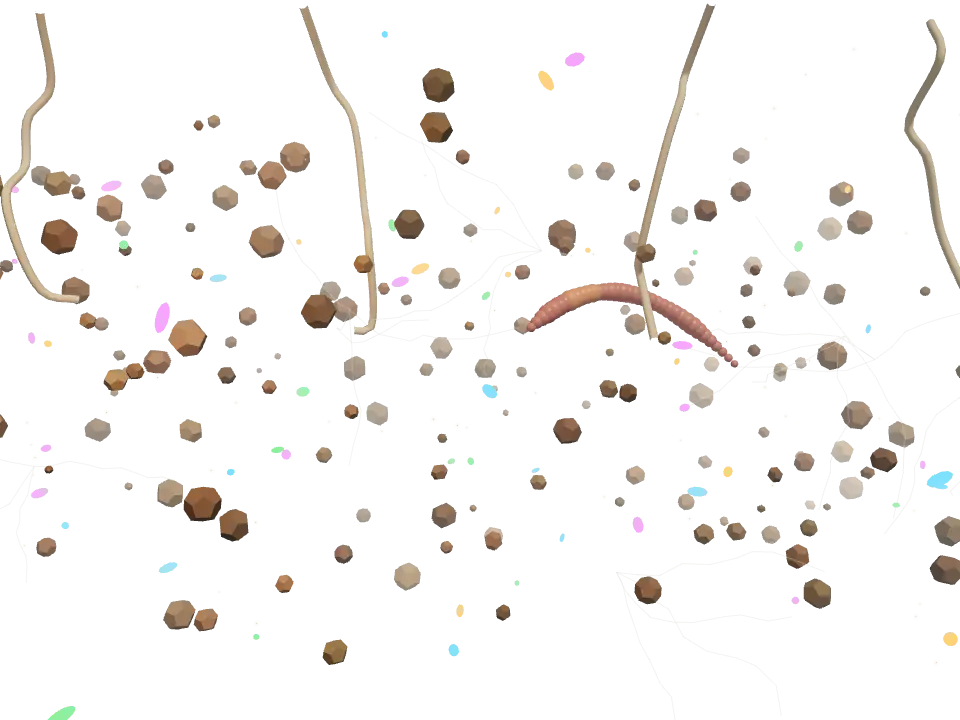
Soil is alive
Bacteria, fungi, earthworms and insects are the unpaid workforce of every farm. They recycle residue into food, build crumbly structure and protect roots from disease.
Nature's ploughs. Their tunnels let air and rain in, and their castings are richer in nutrients than the soil they eat.
Break dead matter down into plant food. Some, like Rhizobium in legume roots, pull nitrogen straight from the air.
Mycorrhizal threads wrap the roots and reach water and phosphorus far beyond where roots can grow.
Why it matters
Soil forms slower than we use it. A season of erosion can strip away what took centuries to build — which is why caring for it is the best long-term investment a farmer makes.
95%
of our food is grown — directly or indirectly — in soil
FAO
up to 1,000 yrs
for nature to build just 1 cm of topsoil
FAO
33%
of the world's soils are already moderately to highly degraded
FAO, 2015
14
of the 17 nutrients a plant needs come only from the soil
Plant nutrition
Grains, pulses, vegetables, fodder for animals — almost every meal starts in a field of soil.
Healthy soil soaks up rain like a sponge, filters it and slowly recharges wells and borewells.
Soils store more carbon than the atmosphere and all the world's plants put together.
Taking care of it
Test every 2–3 years. In India the Soil Health Card scheme tests soil through government labs.
Compost, farmyard manure or vermicompost every season keeps soil life fed.
Mulch or a cover crop shields soil from hard sun, heavy rain and wind.
Follow cereals with legumes — they put nitrogen back for the next crop.
Deep, frequent tillage breaks soil crumbs and kills earthworms.
Drip and sprinkler save water; waterlogging drives out air and builds up salt.
Burning stubble kills soil life and sends free nutrients up in smoke.
Use N, P and K in the ratio your test shows — not urea alone.
Dig one spade deep and check:
Coming next on KhetiVidya: Water & irrigation, Weather, Fertilisers, Pests & diseases — built on what you learnt here.
← All sections