KhetiVidyaहिंदी
All crops

Vegetable · Solanaceae (nightshade family)

Tomato

Tamatar · टमाटर · Solanum lycopersicum

Raised in a net-covered nursery, staked tall and picked as it blushes red.

In the plains of UP, Bihar and the milder parts of the north, tomato is a classic autumn–winter crop: nursery in September–October, transplanting in October–November and picking from January. In frost-prone Punjab and Haryana many farmers prefer the spring crop instead — nursery in November under polythene, transplanting in February after the frost.

Nursery sowing
15 Sep – 31 Oct
Harvest
15 Jan – 15 Apr
Duration
140–180 days
Yield
101–162 q/acre
250–400 q/ha
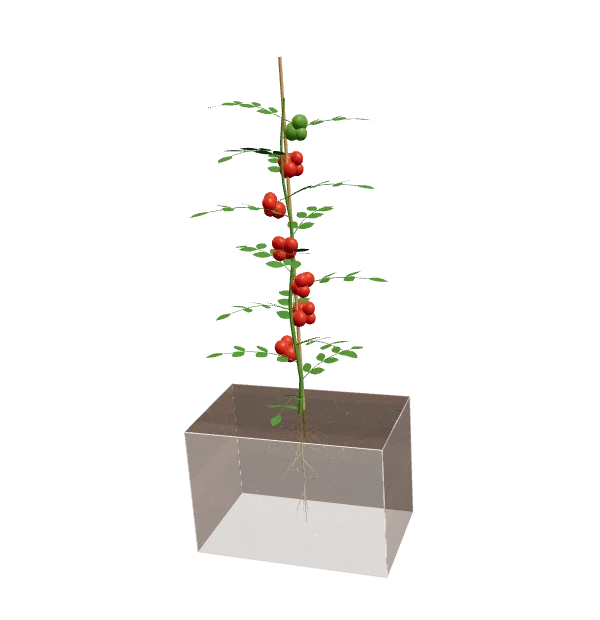
Tomato plant with its roots, in a glass tank

Ripening and picking · roots shown through the soil

At a glance

Tomato in one look

Fruits set best at 18–27 °C. Nights below 10 °C slow growth and frost kills plants. Above about 32 °C flowers drop and fruits do not colour well.

Nursery sowing

15 Sep – 31 Oct

Transplanting

20 Oct – 10 Dec

Harvest

15 Jan – 15 Apr

140–180 days from sowing

Temperature

18–27 °C to grow

20–30 °C at sowing

Soil

Well-drained sandy loam to clay loam, rich in organic matter

pH 6–7

Seed rate

0.1–0.2 kg/acre

0.2–0.5 kg/ha

Spacing

60 × 45 cm

4–6 cm deep

Irrigations

10–15

3 critical stages

Yield

101–162 q/acre

250–400 q/ha

Season

AugSepOctNovDecJanFebMarAprMayJun
Grown most inUttar PradeshMadhya PradeshBiharHaryanaPunjabRajasthan

Standing water quickly leads to wilt and root rot — use ridges or raised beds.

Seed to harvest

Watch tomato grow, stage by stage

Scroll through the season. The plant in the glass tank grows to each stage — roots and all — and every card says what the crop is doing and what you should do in the field that week.

Tomato plant with its roots, in a glass tank

Stage 1 of 7

Nursery sowing

Day 0–6

  1. 1Day 0–6

    Nursery sowing

    Seeds in the net-covered nursery bed take up water and swell.

    Your job · Sow treated seed in lines, cover with fine FYM and keep the net closed.

  2. 2Day 7–12

    Germination

    Two smooth seed leaves (cotyledons) open above the soil.

    Your job · Water lightly; protect from damping-off and cold nights.

  3. 3Day 13–35

    Seedling and transplanting

    Seedlings grow 4–5 true leaves and a strong stem.

    Your job · Harden seedlings, then transplant on ridges at 25–30 days and irrigate immediately.

  4. 4Day 36–65

    Vegetative growth

    The plant branches and grows many leaves.

    Your job · Stake and tie plants, prune side shoots, top-dress nitrogen and weed.

  5. 5Day 66–85

    Flowering

    Clusters of small yellow star-shaped flowers open.

    Your job · Spray boron, avoid water stress, keep the marigold trap crop and pheromone traps in place.

  6. 6Day 86–120

    Fruit set and development

    Green fruits set and swell.

    Your job · Second nitrogen split, even irrigation and protection from fruit borer and blight.

  7. 7Day 121–170

    Ripening and picking

    Fruits turn from green to pink and then red.

    Your job · Pick every 3–4 days at the right colour for your market.

The seed

Good seed is half the harvest

Use certified seed of a variety bred for your region, at the right rate, and treat it before sowing.

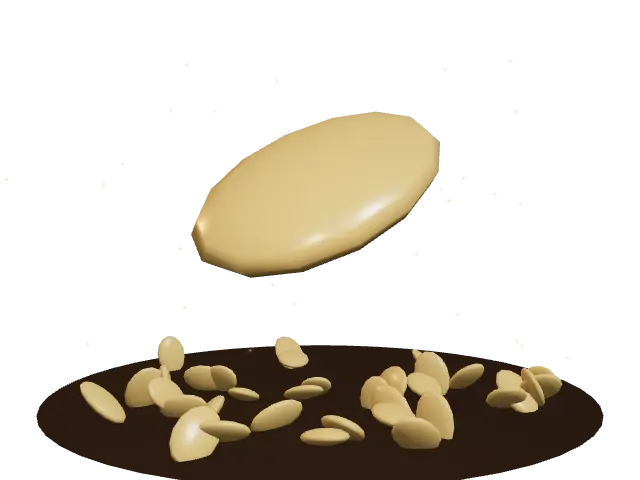
Tomato seeds, close up

One seed

≈ 3 mm

Seed rate

0.1–0.2 kg/acre

0.2–0.5 kg/ha

1000-seed weight

3 g

Recommended varieties

Punjab RattaPAU open-pollinated variety, round red fruits, high yield.
Punjab ChhuharaPAU variety with firm, pear-shaped fruits that travel well.
Pusa RubyIARI early variety, flat-round red fruits.
Pusa RohiniIARI open-pollinated variety, round firm fruits.
Kashi AmanIIVR variety resistant to tomato leaf curl virus.
Hybrids (private seed companies)Higher yield with staking and drip; use 150–200 g seed per hectare and buy fresh seed every season.

Seed treatment

  1. 1Treat seed with thiram or captan 2–3 g per kg, or Trichoderma 4 g per kg, before sowing.
  2. 2Open-pollinated varieties need 400–500 g seed per hectare; hybrids 150–200 g.

Raising the nursery

  1. 1About 250–300 m² of nursery is enough for one hectare.
  2. 2Make raised beds 3 m × 1 m, 15–20 cm high, with fine soil mixed with rotted FYM and Trichoderma.
  3. 3Sow in lines 5 cm apart, 0.5–1 cm deep, and cover with fine FYM.
  4. 4Cover the nursery with 40–50 mesh nylon net so whiteflies cannot reach seedlings and spread leaf curl virus.
  5. 5On cold nights cover the beds with polythene (low tunnel) to protect from frost.
  6. 6Transplant at 4–5 weeks, when seedlings have 4–5 leaves; harden them by giving less water in the last week.

Field & sowing

Prepare the land, then sow at the right gap and depth

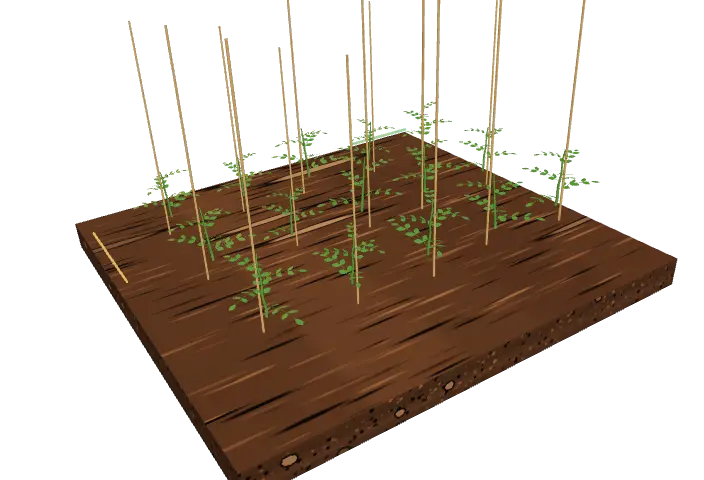
Transplanting on ridges or raised beds, then staking

A Tomato field, showing rows and spacing

Layout

Ridges & furrows

Row to row

60 cm

Plant to plant

45 cm

Depth

4–6 cm

Land preparation

  1. 1Plough 3–4 times to a fine tilth.
  2. 2Mix 20–25 tonnes of well-rotted FYM per hectare.
  3. 3Make ridges 60 cm apart or raised beds; with drip, beds with plastic mulch work well.

Sowing, step by step

  1. 1Make ridges 60 cm apart and irrigate the furrows.
  2. 2Transplant in the evening on the side of the ridge, 45 cm apart, up to the first leaf.
  3. 3Irrigate right after transplanting.
  4. 4Around 30 days later, stake each plant with bamboo or a wire-and-twine trellis and tie the main stem loosely.
  5. 5Remove the lowest leaves and extra side shoots so air moves freely.

Feeding the crop

How much fertiliser, and when

These are the standard doses for a medium-fertility field. Your Soil Health Card can raise or lower them — test first, then feed.

Nutrient dose

Nitrogen (N)49 kg/acre · 120 kg/ha
Phosphorus (P₂O₅)32 kg/acre · 80 kg/ha
Potassium (K₂O)24 kg/acre · 60 kg/ha

Plus 20 t/ha (8.1 t/acre) of well-rotted farmyard manure or compost.

When to apply

  1. 1At transplanting: all phosphorus and potash and one-third of the nitrogen.
  2. 2Remaining nitrogen in two splits — at about 30 days (before flowering) and 50 days (fruit set) after transplanting.
  3. 3Hybrids need more fertiliser — follow your soil test and KVK advice.

Micronutrients, sulphur & biofertilisers

  1. 1Spray boron (borax) at flowering for better fruit set and less cracking — as per label / your KVK.
  2. 2A calcium spray helps prevent blossom-end rot.
  3. 3Zinc sulphate where the soil test shows zinc deficiency.

Bags for your field

For 1 acre of Tomato

What to buy

Urea

1.5

bags · 78 kg

DAP

1.5

bags · 70 kg

MOP

1

bag · 40 kg

Nutrients in it: N 49 kg · P₂O₅ 32 kg · K₂O 24 kg

Also add farmyard manure or compost: 8.1 t

  • Don't put it all in at once: follow the timing on the Tomato page.
  • Your Soil Health Card can raise or lower these amounts. If you have one, follow it.
  • Using SSP, NPK complexes or gypsum instead changes these amounts; the nutrient dose is what matters.

Not yet checked against a package of practices. Confirm the dose with your KVK before you buy.

Urea has 46 % N; DAP 18 % N and 46 % P₂O₅; MOP 60 % K₂O. Urea comes in 45 kg bags, DAP and MOP in 50 kg.

Water

10–15 irrigations — never miss the critical ones

A crop forgives a late irrigation at some stages and punishes it at others. These are the days that decide yield.

Day 30
Day 75
Day 100
SowingDay 180

Critical irrigations

  1. Day 30Transplanting
  2. Day 75Flowering
  3. Day 100Fruit set and enlargement

Watering tips

  1. 1Irrigate every 10–15 days in winter and every 6–8 days as it warms.
  2. 2Keep watering even — irregular water causes fruit cracking and blossom-end rot.
  3. 3Give a light irrigation when frost is forecast.
  4. 4Drip with mulch saves water and keeps leaves dry, reducing blight.

Protection

Weeds, pests and diseases to watch for

Walk the field every week. Most problems are cheap to stop early and expensive to fix late. For any spray, follow the label dose and check with your KVK.

Disease

Leaf curl virus

Signs · Leaves curl upward, stay small and yellowish; plants become bushy and stunted and give very few fruits. Spread by whitefly.

Manage · Raise the nursery under insect-proof net, grow resistant varieties such as Kashi Aman, put up yellow sticky traps and uproot infected plants early. Control whitefly — as per label / your KVK.

Pest

Fruit borer

Signs · Round holes in green fruits with a caterpillar half inside; damaged fruits rot.

Manage · Plant one row of marigold after every 16 rows of tomato as a trap crop, use pheromone traps, pick and destroy damaged fruits, and spray HaNPV or Bt. Use chemicals only if needed — as per label / your KVK.

Disease

Early blight

Signs · Brown spots with concentric rings on older leaves; dark sunken spots near the fruit stalk.

Manage · Remove lower infected leaves, rotate crops and spray mancozeb when spots appear — as per label / your KVK.

Disease

Late blight

Signs · Greasy dark patches on leaves with white mould underneath in cool foggy weather; fruits get firm brown rot.

Manage · Spray mancozeb as a preventive when fog sets in and cymoxanil + mancozeb after the disease appears — as per label / your KVK. Do not plant next to potato.

Disease

Damping-off

Signs · Nursery seedlings rot at soil level and fall over.

Manage · Raised beds, treated seed, thin sowing and no overwatering; drench with Trichoderma.

Disorder

Frost

Signs · Leaves and young fruits turn black after clear, still, very cold nights in December–January.

Manage · Light irrigation and smoke on frost nights; cover young plants. In frost-prone areas, grow the spring crop instead.

Disorder

Blossom-end rot and fruit cracking

Signs · A black sunken patch at the bottom of the fruit, or cracks around the top.

Manage · Water evenly, mulch, and spray calcium if needed.

Weeds

Common · Bathua, motha, doob grass and parthenium

  1. 1Pre-emergence weedicide such as metribuzin or pendimethalin — as per label / your KVK.
  2. 22–3 hand weedings in the first 45 days.
  3. 3Plastic or straw mulch keeps beds weed-free.

Harvest

Harvest on time, dry it well, store it safe

A good crop gives

101–162q/acre

250–400 quintal per hectare

Hybrids with staking and drip can give 600 q/ha or more.

When is it ready?

  1. 1For distant markets: the first pink blush at the bottom of the fruit (breaker stage).
  2. 2For local markets: pink to light red, still firm.
  3. 3For processing: fully red and firm.

Harvesting

  1. 1Pick by hand in the cool morning or evening, every 3–4 days.
  2. 2Collect in plastic crates, not sacks, to avoid bruising.

After harvest & storage

  1. 1Grade by size and colour; remove cracked and diseased fruits.
  2. 2Pack in plastic crates or corrugated boxes.
  3. 3Pink fruits keep best at 10–13 °C; do not keep green fruits below 10 °C — they get chilling injury.

Golden rules for tomato

  1. 1Raise the nursery under insect-proof net — it is the best protection against leaf curl virus.
  2. 2Harden seedlings before transplanting so they settle quickly.
  3. 3Stake and prune; plants off the ground get less disease and better fruit.
  4. 4Water evenly to avoid cracking and blossom-end rot.
  5. 5Protect from frost, or switch to the spring crop if your area gets frost every year.