Pest
Aphids
Signs · Tiny insects under leaves; leaves curl and turn sticky.
Manage · Spray neem oil or a strong water jet. Leaves are eaten fresh — avoid chemical sprays close to cutting and always follow the waiting period.
Vegetable · Amaranthaceae (beet family)
Palak · पालक · Beta vulgaris var. bengalensis
One sowing, many cuttings — feed it after every cut.
The palak of North Indian fields is beet-leaf spinach, a close cousin of European spinach and grown the same way. It is sown once and cut again and again through the winter, so a small plot gives a steady weekly income. Nitrogen and water after each cut keep fresh leaves coming.
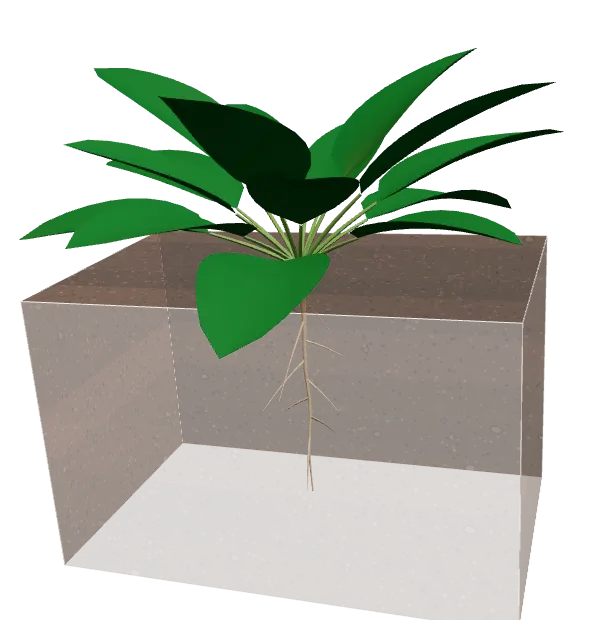
Final cut · roots shown through the soil
At a glance
A cool-season leaf crop that takes light frost. Long, warm days in March make it bolt — send up a flower stalk — which ends the cuttings.
Sowing time
1 Sep – 30 Nov
Harvest
10 Oct – 31 Mar
30–40 days from sowing
Temperature
10–25 °C to grow
15–30 °C at sowing
Soil
Fertile loam or sandy loam rich in organic matter
pH 6.5–8
Seed rate
8.1–12 kg/acre
20–30 kg/ha
Spacing
20 × 5 cm
2–3 cm deep
Irrigations
8–12
3 critical stages
Yield
49–81 q/acre
120–200 q/ha
Season
Palak tolerates mildly alkaline and slightly salty soils better than most vegetables.
Seed to harvest
Scroll through the season. The plant in the glass tank grows to each stage — roots and all — and every card says what the crop is doing and what you should do in the field that week.
Stage 1 of 7
Sowing
Day 0–4
Soaked seed is sown in lines in flat beds.
Your job · Irrigate lightly.
Two narrow seed leaves appear in about a week.
Your job · Keep the surface moist so it doesn't crust.
The first true leaves unfold.
Your job · Thin to 5 cm and weed.
Leaves grow fast into a dense rosette.
Your job · Irrigate and keep weeds out.
Leaves are 15–20 cm long and tender — ready for the first cut.
Your job · Cut 4–5 cm above the crown, then top-dress and irrigate.
New leaves regrow from the crown every 15–20 days.
Your job · Cut, feed and water in a steady cycle.
Warm days arrive and plants start to bolt.
Your job · Take the last cut and clear the field.
The seed
Use certified seed of a variety bred for your region, at the right rate, and treat it before sowing.
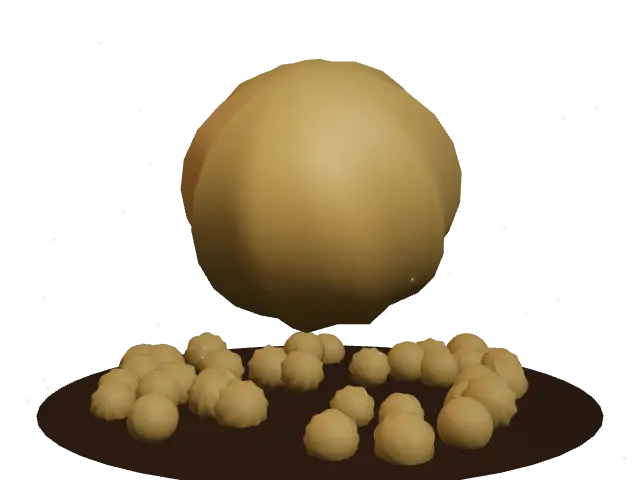
One seed cluster
≈ 4 mm
Seed rate
8.1–12 kg/acre
20–30 kg/ha
1000-seed weight
—
Field & sowing
Line sowing in flat beds
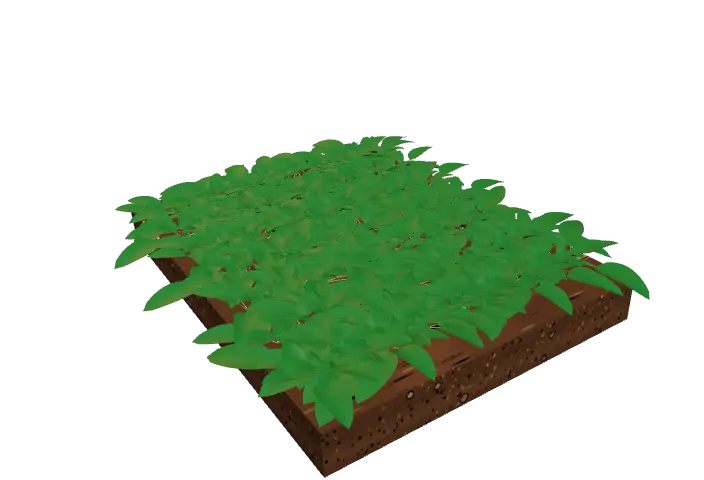
Layout
Flat beds
Row to row
20 cm
Plant to plant
5 cm
Depth
2–3 cm
Feeding the crop
These are the standard doses for a medium-fertility field. Your Soil Health Card can raise or lower them — test first, then feed.
Nutrient dose
Plus 20 t/ha (8.1 t/acre) of well-rotted farmyard manure or compost.
For 1 acre of Spinach
What to buy
Urea
1.5
bags · 71 kg
DAP
1
bag · 44 kg
MOP
0.5
bags · 27 kg
Nutrients in it: N 40 kg · P₂O₅ 20 kg · K₂O 16 kg
Also add farmyard manure or compost: 8.1 t
Not yet checked against a package of practices. Confirm the dose with your KVK before you buy.
Urea has 46 % N; DAP 18 % N and 46 % P₂O₅; MOP 60 % K₂O. Urea comes in 45 kg bags, DAP and MOP in 50 kg.
Water
A crop forgives a late irrigation at some stages and punishes it at others. These are the days that decide yield.
Protection
Walk the field every week. Most problems are cheap to stop early and expensive to fix late. For any spray, follow the label dose and check with your KVK.
Signs · Tiny insects under leaves; leaves curl and turn sticky.
Manage · Spray neem oil or a strong water jet. Leaves are eaten fresh — avoid chemical sprays close to cutting and always follow the waiting period.
Signs · Irregular holes and eaten leaf edges; caterpillars hide under leaves.
Manage · Hand-pick, spray Bt or neem. Use an insecticide only if severe — as per label / your KVK, never just before cutting.
Signs · Small round spots with grey centres and reddish-purple edges.
Manage · Use clean seed, avoid overhead watering and remove spotted leaves. Carbendazim if it spreads — as per label / your KVK.
Signs · Seedlings or young plants wilt and rot at the soil line.
Manage · Treated seed, good drainage and no over-watering.
Signs · A flower stalk shoots up and leaves turn small and tough.
Manage · Sow on time, choose slow-bolting varieties and keep cutting regularly.
Signs · New leaves come up light green or yellow after a few cuttings.
Manage · The crop is short of nitrogen — top-dress after every cutting and irrigate.
Common · Bathua (Chenopodium), krishneel (Anagallis), motha (Cyperus)
Harvest
A good crop gives
49–81q/acre
120–200 quintal per hectare
Total of all cuttings in a season.