KhetiVidyaहिंदी
All crops

Pulse · Fabaceae (pea family)

Pea

Matar · मटर · Pisum sativum

Sweet green pods for the market or dry grain for dal.

Pea is grown in two ways in North India: garden pea, picked as green pods for the vegetable market from December to February, and field pea, left to dry for grain. Both fix nitrogen and suit cool winters.

Sowing
10 Oct – 15 Nov
Harvest
15 Dec – 10 Apr
Duration
75–140 days
Yield
32–49 q/acre
80–120 q/ha
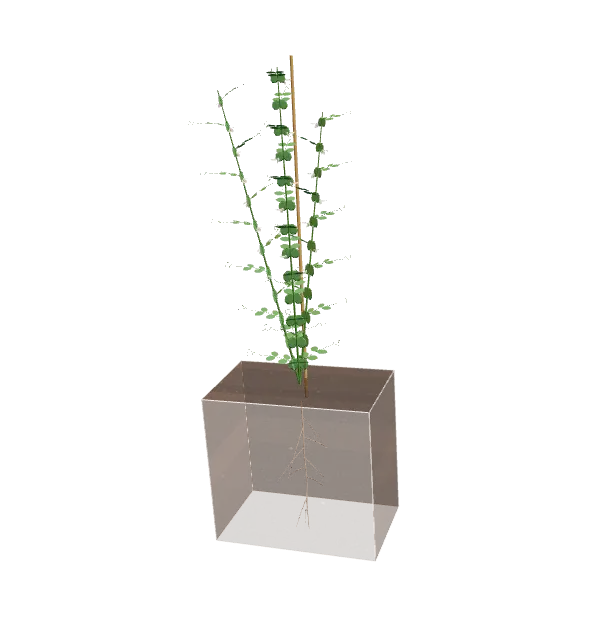
Pea plant with its roots, in a glass tank

Pod filling — green pod picking · roots shown through the soil

At a glance

Pea in one look

A cool-weather crop. Frost at flowering and pod stage damages flowers and pods; heat above 30 °C at flowering reduces pod set.

Sowing time

10 Oct – 15 Nov

Harvest

15 Dec – 10 Apr

75–140 days from sowing

Temperature

10–24 °C to grow

18–24 °C at sowing

Soil

Well-drained loam to clay loam

pH 6–7.5

Seed rate

30–51 kg/acre

75–125 kg/ha

Spacing

30 × 7 cm

4–5 cm deep

Irrigations

2–4

2 critical stages

Yield

32–49 q/acre

80–120 q/ha

Season

AugSepOctNovDecJanFebMarAprMayJun
Grown most inUttar PradeshMadhya PradeshPunjabHimachal PradeshBiharHaryanaUttarakhand

Avoid waterlogged, saline and very acidic soils. Good drainage prevents root rot.

Seed to harvest

Watch pea grow, stage by stage

Scroll through the season. The plant in the glass tank grows to each stage — roots and all — and every card says what the crop is doing and what you should do in the field that week.

Pea plant with its roots, in a glass tank

Stage 1 of 7

Sowing

Day 0–5

  1. 1Day 0–5

    Sowing

    Round seeds absorb moisture and swell.

    Your job · Sow treated, Rhizobium-coated seed 4–5 cm deep in moist soil.

  2. 2Day 6–12

    Germination

    Root goes down and a hooked shoot comes up; seed halves stay underground.

    Your job · Avoid irrigation until seedlings emerge.

  3. 3Day 13–25

    Seedling

    First leaves with broad leaflets and stipules open; nodules start.

    Your job · First hoeing at 20–25 days.

  4. 4Day 26–45

    Vine growth

    Stems lengthen and tendrils grab onto neighbours or supports.

    Your job · Stake tall varieties. Second hoeing at 40–45 days.

  5. 5Day 46–65

    Flowering

    White flowers open in pairs at the leaf joints.

    Your job · Irrigate if dry; watch for powdery mildew and protect from frost.

  6. 6Day 66–100

    Pod filling — green pod picking

    Pods lengthen and seeds fill out; green pods are sweet and tender.

    Your job · Pick green pods every 7–10 days in the cool morning. Irrigate at pod filling.

  7. 7Day 101–135

    Dry pod maturity

    For grain, pods dry, turn straw-coloured and seeds harden.

    Your job · Harvest the grain crop when most pods are dry.

The seed

Good seed is half the harvest

Use certified seed of a variety bred for your region, at the right rate, and treat it before sowing.

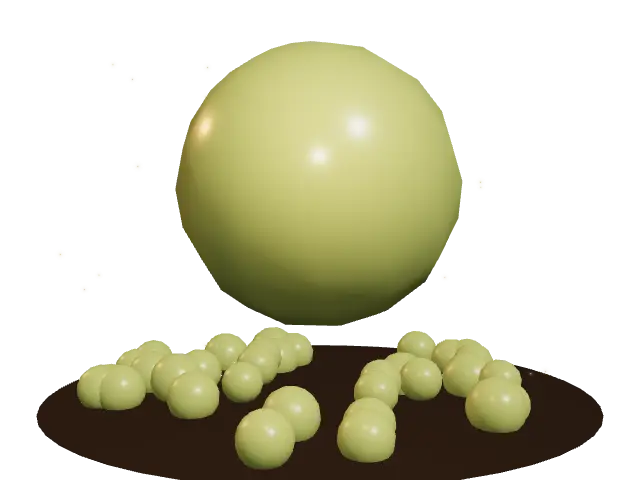
Pea seeds, close up

One seed

≈ 7 mm

Seed rate

30–51 kg/acre

75–125 kg/ha

1000-seed weight

—

Recommended varieties

ArkelEarly garden pea; green pods ready in about 60–65 days. Use the higher seed rate.
Matar Ageta 6PAU early garden pea for early sowing.
Punjab 89PAU main-season garden pea with long, well-filled pods.
Pusa PragatiIARI main-season garden pea; good pod yield.
Kashi NandiniIIVR, Varanasi early garden pea for Uttar Pradesh.

Seed treatment

  1. 1Treat seed with a fungicide (such as captan or thiram) or Trichoderma against seed rot and wilt, as per label / your KVK.
  2. 2Then coat with pea Rhizobium culture just before sowing.

Field & sowing

Prepare the land, then sow at the right gap and depth

Line sowing with a drill or by hand behind the plough

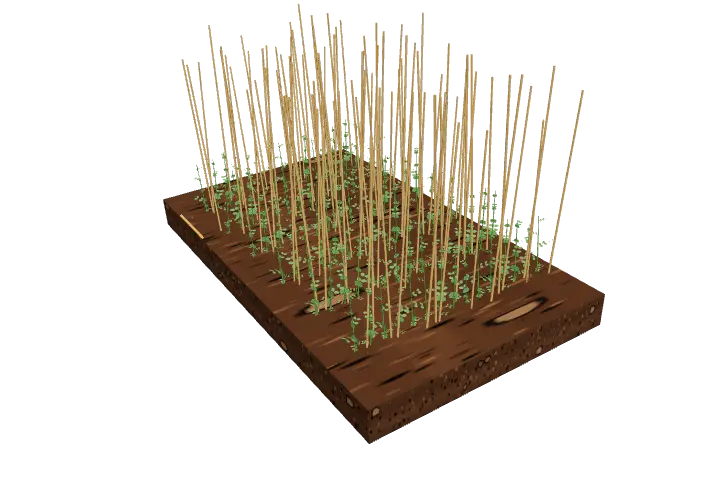
A Pea field, showing rows and spacing

Layout

Flat beds

Row to row

30 cm

Plant to plant

7 cm

Depth

4–5 cm

Land preparation

  1. 1Plough and give 2–3 harrowings with planking for a fine, level seedbed.
  2. 2Mix well-rotted farmyard manure during preparation.
  3. 3Make sure the field drains well.

Sowing, step by step

  1. 1Sow in moist soil in rows 30 cm apart (45 cm for tall field pea), plants 5–10 cm apart.
  2. 2Keep seed 4–5 cm deep.
  3. 3Early varieties need a higher seed rate (about 100–125 kg/ha); main-season varieties about 75–90 kg/ha.
  4. 4Tall varieties need support — stake them with sticks or twine.

Feeding the crop

How much fertiliser, and when

These are the standard doses for a medium-fertility field. Your Soil Health Card can raise or lower them — test first, then feed.

Nutrient dose

Nitrogen (N)10 kg/acre · 25 kg/ha
Phosphorus (P₂O₅)24 kg/acre · 60 kg/ha
Potassium (K₂O)16 kg/acre · 40 kg/ha

Plus 15 t/ha (6.1 t/acre) of well-rotted farmyard manure or compost.

When to apply

  1. 1Apply all fertiliser at sowing, drilled below the seed.
  2. 2Small starter nitrogen only — nodules supply the rest.

Micronutrients, sulphur & biofertilisers

  1. 1Rhizobium seed treatment.
  2. 2Sulphur through SSP or gypsum on sulphur-poor soils.
  3. 3On acidic soils, molybdenum may be needed for good nodulation — as advised by your KVK.

Bags for your field

For 1 acre of Pea

What to buy

Urea

1.3

kg

DAP

1

bag · 53 kg

MOP

0.5

bags · 27 kg

Nutrients in it: N 10 kg · P₂O₅ 24 kg · K₂O 16 kg

Also add farmyard manure or compost: 6.1 t

  • Don't put it all in at once: follow the timing on the Pea page.
  • Your Soil Health Card can raise or lower these amounts. If you have one, follow it.
  • Using SSP, NPK complexes or gypsum instead changes these amounts; the nutrient dose is what matters.

Not yet checked against a package of practices. Confirm the dose with your KVK before you buy.

Urea has 46 % N; DAP 18 % N and 46 % P₂O₅; MOP 60 % K₂O. Urea comes in 45 kg bags, DAP and MOP in 50 kg.

Water

2–4 irrigations — never miss the critical ones

A crop forgives a late irrigation at some stages and punishes it at others. These are the days that decide yield.

Day 45
Day 65
SowingDay 140

Critical irrigations

  1. Day 45Flowering
  2. Day 65Pod filling

Watering tips

  1. 1Sow after a pre-sowing irrigation; avoid irrigating again until seedlings are up.
  2. 2Garden pea needs steady moisture at flowering and pod filling for well-filled pods.
  3. 3Light irrigation on frosty nights protects flowers and pods.
  4. 4Never let water stand in the field.

Protection

Weeds, pests and diseases to watch for

Walk the field every week. Most problems are cheap to stop early and expensive to fix late. For any spray, follow the label dose and check with your KVK.

Disease

Powdery mildew

Signs · White powdery coating on leaves, stems and pods from January, especially in late-sown crops.

Manage · Sow on time and grow resistant varieties. Spray wettable sulphur or another recommended fungicide at first sign, as per label / your KVK.

Disease

Rust

Signs · Yellow-orange powdery spots on leaves and stems late in the season.

Manage · Grow tolerant varieties; spray a recommended fungicide at first sign, as per label / your KVK.

Pest

Pea stem fly

Signs · In early-sown crops, young plants turn yellow and wilt; maggots tunnel inside the stem.

Manage · Avoid very early sowing; use a recommended insecticide at sowing in problem areas, as per label / your KVK.

Pest

Leaf miner

Signs · White zigzag tunnels on leaves; heavy attack dries leaves.

Manage · Remove badly mined lower leaves; spray a recommended insecticide only if attack is severe, as per label / your KVK.

Pest

Pod borer

Signs · Caterpillars bore into pods and eat seeds.

Manage · Pheromone traps and regular picking of green pods; spray a recommended insecticide with a short waiting period only if needed, as per label / your KVK.

Disease

Wilt and root rot

Signs · Plants turn yellow and wilt; roots rot, especially in early sowing in warm, wet soil.

Manage · Seed treatment, timely sowing, good drainage and crop rotation.

Disorder

Frost injury

Signs · Flowers and young pods turn black and drop after frosty nights.

Manage · Give a light irrigation when frost is forecast; smoke along field edges at night helps.

Weeds

Common · Bathua, senji, krishna neel, chatri matri

  1. 1Hoe at 20–25 and 40–45 days after sowing.
  2. 2Pendimethalin as a pre-emergence spray right after sowing, as per label / your KVK.

Harvest

Harvest on time, dry it well, store it safe

A good crop gives

32–49q/acre

80–120 quintal per hectare

Green pods. A dry-grain crop gives about 18–25 q/ha.

When is it ready?

  1. 1Green pods: well filled, bright green, seeds still tender and sweet.
  2. 2Grain: pods dry and straw-coloured, seeds hard and rattling.

Harvesting

  1. 1Pick green pods by hand in 3–4 pickings at 7–10 day intervals.
  2. 2For grain, cut or pull plants, dry in the sun and thresh.

After harvest & storage

  1. 1Send green pods to market the same day in airy bags or crates; keep them in shade.
  2. 2Dry grain to 9–10 % moisture and store in airtight bins against pulse beetle.

Golden rules for pea

  1. 1Use early varieties to catch high green-pea prices in December.
  2. 2Don't irrigate between sowing and emergence — seeds rot.
  3. 3Pick green pods regularly; delayed picking makes them hard and starchy.
  4. 4Grow powdery-mildew-resistant varieties and sow on time.
  5. 5Pea leaves nitrogen behind — follow it with a cereal or vegetable that benefits.