Disease
Wilt
Signs · Plants turn yellow, droop and dry in patches; roots look brown inside.
Manage · Grow tolerant varieties, treat seed with fungicide and Trichoderma, avoid early sowing in warm soil and rotate crops.
Pulse · Fabaceae (pea family)
Masoor · मसूर · Lens culinaris
Small seed, big protein — a hardy pulse for low-input fields.
Lentil is a hardy, short pulse that grows on stored moisture and fixes its own nitrogen. In Bihar and eastern Uttar Pradesh it is often broadcast into standing paddy just before rice harvest (utera or paira cropping), using leftover moisture.
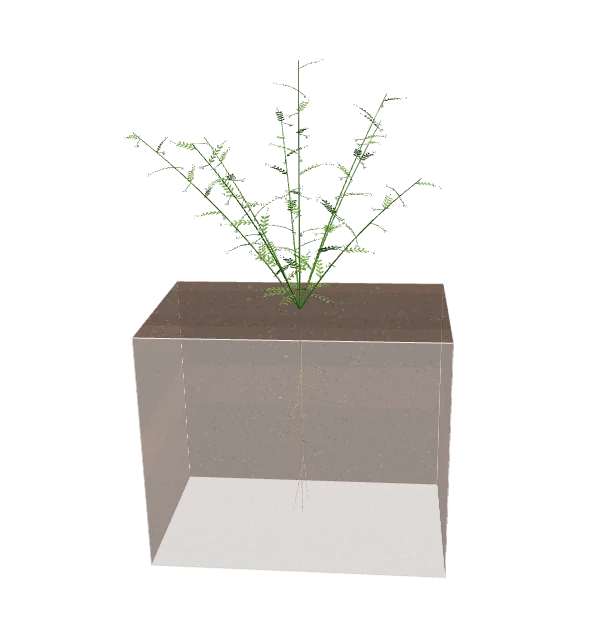
Flowering · roots shown through the soil
At a glance
Cool weather suits it. Frost at flowering damages flowers and humid weather favours blight.
Sowing time
20 Oct – 15 Nov
Harvest
15 Mar – 10 Apr
115–135 days from sowing
Temperature
15–25 °C to grow
18–25 °C at sowing
Soil
Loam to clay loam, well drained; grows on rice fallows
pH 6–8
Seed rate
16–24 kg/acre
40–60 kg/ha
Spacing
22.5 cm rows
3–5 cm deep
Irrigations
1–2
2 critical stages
Yield
6.1–8.1 q/acre
15–20 q/ha
Season
Avoid waterlogged and saline soils. Tolerates mild alkalinity.
Seed to harvest
Scroll through the season. The plant in the glass tank grows to each stage — roots and all — and every card says what the crop is doing and what you should do in the field that week.
Stage 1 of 7
Sowing
Day 0–5
Small lens-shaped seeds absorb moisture and swell.
Your job · Sow treated, Rhizobium-coated seed shallow in moist soil.
Root goes down and a thin shoot comes up; seed halves stay in the soil.
Your job · Check the stand.
Tiny leaflets open; nodules start forming on roots.
Your job · First hoeing at 25–30 days.
Thin branches spread and the plant becomes bushy.
Your job · Light irrigation at branching if dry. Second hoeing at 45–50 days.
Small pale violet-white flowers appear.
Your job · Watch for rust and blight in humid weather.
Small flat pods form, each with one or two seeds.
Your job · Check for pod borer; light irrigation at pod formation if very dry.
Plants and pods turn yellowish-brown and dry.
Your job · Harvest in the morning to reduce shattering.
The seed
Use certified seed of a variety bred for your region, at the right rate, and treat it before sowing.

One seed
≈ 4.5 mm
Seed rate
16–24 kg/acre
40–60 kg/ha
1000-seed weight
—
Field & sowing
Line sowing with a drill; broadcast as utera in standing rice
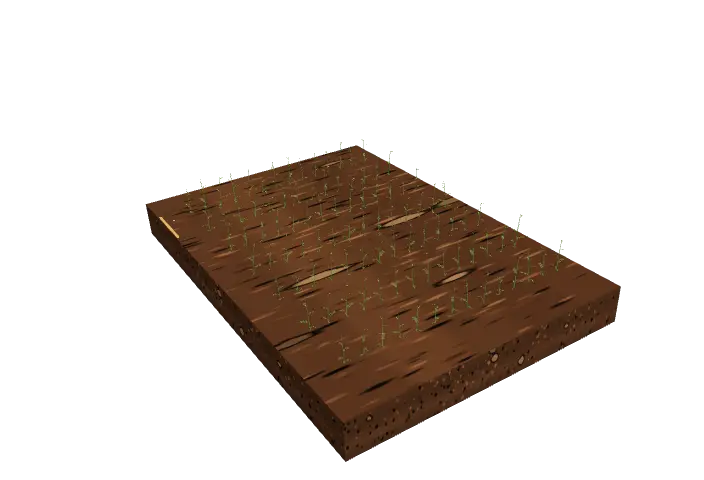
Layout
Flat beds
Row to row
22.5 cm
Plant to plant
—
Depth
3–5 cm
Feeding the crop
These are the standard doses for a medium-fertility field. Your Soil Health Card can raise or lower them — test first, then feed.
Nutrient dose
Plus 5 t/ha (2 t/acre) of well-rotted farmyard manure or compost.
For 1 acre of Lentil
What to buy
Urea
3.8
kg
DAP
0.5
bags · 35 kg
MOP
0.5
bags · 13 kg
Nutrients in it: N 8.1 kg · P₂O₅ 16 kg · K₂O 8.1 kg
Also add farmyard manure or compost: 2 t
Not yet checked against a package of practices. Confirm the dose with your KVK before you buy.
Urea has 46 % N; DAP 18 % N and 46 % P₂O₅; MOP 60 % K₂O. Urea comes in 45 kg bags, DAP and MOP in 50 kg.
Water
A crop forgives a late irrigation at some stages and punishes it at others. These are the days that decide yield.
Protection
Walk the field every week. Most problems are cheap to stop early and expensive to fix late. For any spray, follow the label dose and check with your KVK.
Signs · Plants turn yellow, droop and dry in patches; roots look brown inside.
Manage · Grow tolerant varieties, treat seed with fungicide and Trichoderma, avoid early sowing in warm soil and rotate crops.
Signs · Yellow-orange then dark brown powdery spots on leaves and stems in January–February; plants dry early.
Manage · Grow resistant varieties such as IPL 316. Spray a recommended fungicide like mancozeb at first sign, as per label / your KVK.
Signs · Small brown spots on leaflets that spread quickly in humid weather; leaves fall and plants look burnt. Common in Bihar.
Manage · Timely sowing, balanced fertiliser and a recommended fungicide when it first appears, as per label / your KVK.
Signs · Colonies on shoot tips and pods; tips curl and dry.
Manage · Natural enemies usually control them; spray a recommended insecticide only if colonies are heavy, as per label / your KVK.
Signs · Caterpillars bore into pods and eat the seeds.
Manage · Pheromone traps and bird perches; spray a recommended insecticide only when the pest is above the threshold, as per label / your KVK.
Signs · After heavy rain or irrigation, plants yellow and die in low spots.
Manage · Level the field, make drainage channels and irrigate lightly.
Common · Bathua, krishna neel, senji, chatri matri, wild pea
Harvest
A good crop gives
6.1–8.1q/acre
15–20 quintal per hectare
Dry plant residue (bhusa) is good cattle feed.