
KhetiVidyaहिंदी
All crops

Oilseed · Brassicaceae (mustard family)

Mustard

Sarson / Raya · सरसों · Brassica juncea

The yellow fields of winter — North India's main cooking-oil crop.

Indian mustard (raya) is the biggest rabi oilseed of the northern plains. It needs little water, fits well after kharif crops and gives oil, oil-cake for cattle and green saag. Timely sowing, sulphur and aphid control decide the harvest.

Sowing
1 Oct – 30 Oct
Harvest
1 Mar – 5 Apr
Duration
125–150 days
Yield
8.1–10 q/acre
20–25 q/ha
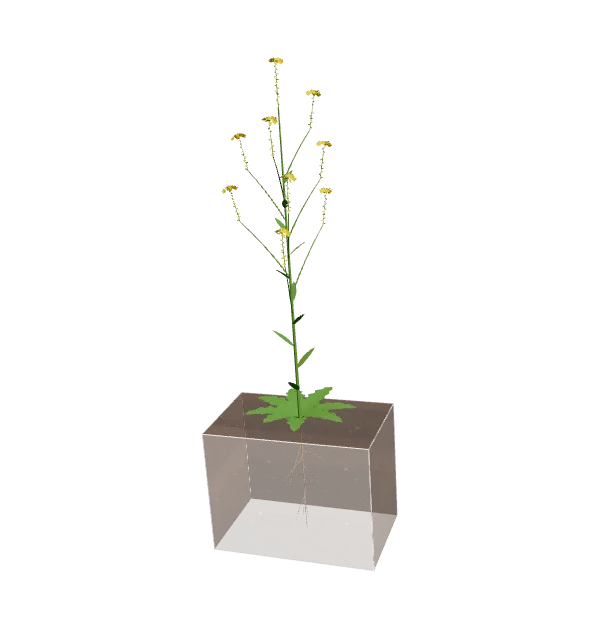
Mustard plant with its roots, in a glass tank

Flowering · roots shown through the soil

At a glance

Mustard in one look

Likes cool, dry, sunny days. Frost at flowering and pod stage can kill flowers and shrivel seeds; cloudy, humid weather brings aphids.

Sowing time

1 Oct – 30 Oct

Harvest

1 Mar – 5 Apr

125–150 days from sowing

Temperature

10–25 °C to grow

18–25 °C at sowing

Soil

Loam to sandy loam; grows well on light soils of Rajasthan and Haryana

pH 6.5–8

Seed rate

1.6–2 kg/acre

4–5 kg/ha

Spacing

45 × 15 cm

3–5 cm deep

Irrigations

2–3

3 critical stages

Yield

8.1–10 q/acre

20–25 q/ha

Season

AugSepOctNovDecJanFebMarAprMayJun
Grown most inRajasthanHaryanaUttar PradeshMadhya PradeshPunjabBihar

Needs good drainage — even a day of standing water hurts the roots. Tolerates mildly alkaline soil.

Seed to harvest

Watch mustard grow, stage by stage

Scroll through the season. The plant in the glass tank grows to each stage — roots and all — and every card says what the crop is doing and what you should do in the field that week.

Mustard plant with its roots, in a glass tank

Stage 1 of 7

Sowing

Day 0–3

  1. 1Day 0–3

    Sowing

    Treated seed sits in moist soil and soaks up water.

    Your job · Sow in lines at the right depth; apply pre-emergence weedicide within two days.

  2. 2Day 4–8

    Germination

    Two heart-shaped seed leaves push out of the soil.

    Your job · Watch for gaps; check for painted bug in warm weather.

  3. 3Day 9–25

    Rosette

    A flat rosette of broad leaves forms close to the ground.

    Your job · Thin to 10–15 cm and hoe once at 20–25 days.

  4. 4Day 26–45

    Branching

    The main stem shoots up and side branches form.

    Your job · First irrigation and the second half of nitrogen.

  5. 5Day 46–75

    Flowering

    Bright yellow flowers open from the bottom of each branch upward. Bees help pollination.

    Your job · Scout for aphids twice a week; protect from frost; spray only in the afternoon.

  6. 6Day 76–120

    Pod filling

    Thin pods (siliquae) form and fill with seed; oil builds up in the seed.

    Your job · Second irrigation at pod formation; keep watching aphids and blight.

  7. 7Day 121–145

    Maturity

    Pods turn yellow-brown, leaves drop and seeds turn dark and hard.

    Your job · Harvest when about three-quarters of the pods are yellow — waiting longer means shattering.

The seed

Good seed is half the harvest

Use certified seed of a variety bred for your region, at the right rate, and treat it before sowing.

Mustard seeds, close up

One seed

≈ 1.8 mm

Seed rate

1.6–2 kg/acre

4–5 kg/ha

1000-seed weight

5 g

Recommended varieties

RH 725HAU Hisar; long pods, bold seed, high yield under irrigation.
RH 749HAU Hisar; high-yielding, popular in Haryana and Rajasthan.
Giriraj (DRMR IJ-31)DRMR Bharatpur; high yield and oil content for irrigated, timely sowing.
Pusa Mustard 30IARI; low erucic acid — better quality, healthier oil.
NRCHB 101DRMR Bharatpur; suited to late sowing in November.

Seed treatment

  1. 1Treat seed with metalaxyl (Apron 35 SD) at 6 g per kg seed against white rust and downy mildew.
  2. 2Or use Trichoderma at about 10 g per kg seed for soil-borne diseases.
  3. 3Treat with Azotobacter and PSB cultures last, just before sowing, and sow in the shade-dried seed the same day.

Field & sowing

Prepare the land, then sow at the right gap and depth

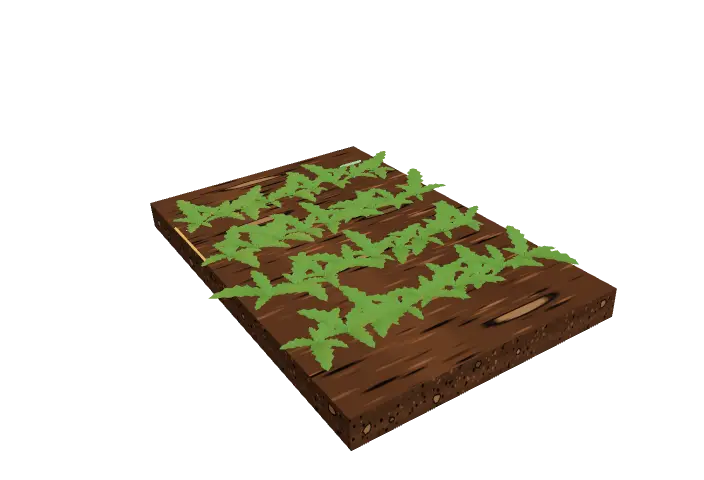
Line sowing with a seed drill or pora behind the plough

A Mustard field, showing rows and spacing

Layout

Flat beds

Row to row

45 cm

Plant to plant

15 cm

Depth

3–5 cm

Land preparation

  1. 1Give a pre-sowing irrigation (palewa) if the soil is dry.
  2. 2Plough 2–3 times and plank after each to get a fine, firm seedbed.
  3. 3Level the field well so water does not stand anywhere.
  4. 4Mix well-rotted FYM in the last ploughing.

Sowing, step by step

  1. 1Sow in lines 30–45 cm apart; use the closer spacing for late sowing.
  2. 2Mix the tiny seed with fine sand or soil for even dropping.
  3. 3Place seed 3–5 cm deep, into moist soil — not deeper.
  4. 4Thin out at 15–20 days so plants stand 10–15 cm apart; extra plants can be used as saag.

Feeding the crop

How much fertiliser, and when

These are the standard doses for a medium-fertility field. Your Soil Health Card can raise or lower them — test first, then feed.

Nutrient dose

Nitrogen (N)32 kg/acre · 80 kg/ha
Phosphorus (P₂O₅)16 kg/acre · 40 kg/ha
Potassium (K₂O)16 kg/acre · 40 kg/ha

Plus 10 t/ha (4 t/acre) of well-rotted farmyard manure or compost.

When to apply

  1. 1At sowing: half the nitrogen and all phosphorus, potash and sulphur, drilled below the seed.
  2. 2At first irrigation (25–35 days): the remaining half of nitrogen.
  3. 3Use single super phosphate (SSP) for phosphorus — it also supplies sulphur.
  4. 4Give potash only if your soil test shows it is low.

Micronutrients, sulphur & biofertilisers

  1. 1Sulphur is a must for oil: 40 kg S/ha through SSP or about 250 kg gypsum per hectare at sowing.
  2. 2Zinc sulphate 25 kg/ha once in 2–3 years where soils are zinc-deficient.
  3. 3Borax about 10 kg/ha only in soils tested low in boron.

Bags for your field

For 1 acre of Mustard

What to buy

Urea

1.5

bags · 57 kg

DAP

0.5

bags · 35 kg

MOP

0.5

bags · 27 kg

Nutrients in it: N 32 kg · P₂O₅ 16 kg · K₂O 16 kg

Also add farmyard manure or compost: 4 t

  • Don't put it all in at once: follow the timing on the Mustard page.
  • Your Soil Health Card can raise or lower these amounts. If you have one, follow it.
  • Using SSP, NPK complexes or gypsum instead changes these amounts; the nutrient dose is what matters.

Not yet checked against a package of practices. Confirm the dose with your KVK before you buy.

Urea has 46 % N; DAP 18 % N and 46 % P₂O₅; MOP 60 % K₂O. Urea comes in 45 kg bags, DAP and MOP in 50 kg.

Water

2–3 irrigations — never miss the critical ones

A crop forgives a late irrigation at some stages and punishes it at others. These are the days that decide yield.

Day 35
Day 75
Day 100
SowingDay 150

Critical irrigations

  1. Day 35Branching / pre-flowering
  2. Day 75Pod formation
  3. Day 100Seed filling (light soils)

Watering tips

  1. 1Mustard is a thrifty crop — two irrigations are enough on most soils.
  2. 2Give a light irrigation when frost is forecast; moist soil keeps the field warmer at night.
  3. 3Do not irrigate on windy days after flowering — tall plants lodge easily.
  4. 4Never let water stand in the field.

Protection

Weeds, pests and diseases to watch for

Walk the field every week. Most problems are cheap to stop early and expensive to fix late. For any spray, follow the label dose and check with your KVK.

Pest

Mustard aphid (mahu, chepa)

Signs · Thick colonies of small grey-green insects on flower tops and pods; shoots curl, pods stay small, sticky honeydew.

Manage · Sow before 25 October so the crop escapes the peak. Break off badly infested tops early. Spray only when about a tenth of plants carry colonies; imidacloprid or thiamethoxam as per label / your KVK. Spray in the afternoon to spare bees.

Pest

Painted bug and sawfly

Signs · Seedlings wilt and dry in patches (painted bug); leaves eaten into holes by dark green caterpillars (sawfly) in the first month.

Manage · First irrigation at 3–4 weeks washes out painted bug. Shake and hand-pick sawfly larvae in the morning; spray only if damage is heavy, as per label / your KVK.

Disease

White rust

Signs · White raised blisters under the leaves; flower stalks swell and twist into a 'stag head'.

Manage · Seed treatment with metalaxyl. Grow tolerant varieties. At first blisters spray metalaxyl + mancozeb, as per label / your KVK.

Disease

Alternaria blight

Signs · Dark brown round spots with rings on leaves, later on stems and pods; pods shrivel.

Manage · Timely sowing and balanced fertiliser. Spray mancozeb at first spots (about 45–50 days) and repeat after 15 days if weather stays humid, as per label / your KVK.

Disease

Sclerotinia stem rot

Signs · White cotton-like growth on the stem near the base; stem bleaches and breaks, black seed-like bodies inside.

Manage · Rotate with wheat or barley, avoid heavy irrigation and very thick stands, collect and burn infected plants. Fungicide spray only on KVK advice.

Disorder

Frost injury

Signs · After a very cold night flowers and young pods turn white and drop; seeds remain shrivelled.

Manage · Light irrigation when frost is forecast; smoke along the windward side of the field at night.

Weeds

Common · Bathua, krishneel (blue pimpernel), wild oats and the parasitic broomrape (Orobanche, 'margoja')

  1. 1One hoeing at 20–25 days, together with thinning, keeps most weeds down.
  2. 2Pre-emergence pendimethalin within two days of sowing, as per label / your KVK.
  3. 3Broomrape: pull out its fleshy shoots before they set seed and do not repeat mustard on the same field; DRMR's very-low-dose glyphosate method needs KVK guidance.

Harvest

Harvest on time, dry it well, store it safe

A good crop gives

8.1–10q/acre

20–25 quintal per hectare

Seed holds about 38–42% oil.

When is it ready?

  1. 1About 75% of pods have turned yellow-brown.
  2. 2Seeds inside are hard and dark brown or black (yellow in yellow-seeded types).
  3. 3Most leaves have fallen.

Harvesting

  1. 1Cut with a sickle early in the morning while pods are moist — fewer seeds shatter.
  2. 2Stack the bundles for 5–7 days to finish drying.
  3. 3Thresh with a thresher or by beating on a clean floor or tarpaulin.

After harvest & storage

  1. 1Dry seed in the sun to about 8% moisture before storing.
  2. 2Store in clean bags on wooden planks, away from walls, in a dry room.
  3. 3Oil-cake left after crushing is valuable cattle feed and manure.

Golden rules for mustard

  1. 1Sow by 25 October — late crops face more aphids and frost.
  2. 2Never skip sulphur; without it you lose both yield and oil.
  3. 3Two well-timed irrigations beat many light ones.
  4. 4Don't wait for every pod to dry — harvest at 75% yellow pods to avoid shattering.
  5. 5Rotate with wheat or barley to break white rust and stem rot.