
KhetiVidyaहिंदी
All crops

Vegetable · Amaryllidaceae (onion family)

Onion

Pyaz · प्याज़ · Allium cepa

Every leaf it grows becomes one ring of the bulb.

Rabi onion is the crop that stores. Seedlings are raised in a nursery in October–November, transplanted in December–January and harvested in April–May. Bulbs from this crop keep for months and supply the market until the next harvest, so a well-cured rabi crop often earns the best price.

Nursery sowing
15 Oct – 20 Nov
Harvest
15 Apr – 31 May
Duration
160–190 days
Yield
101–142 q/acre
250–350 q/ha
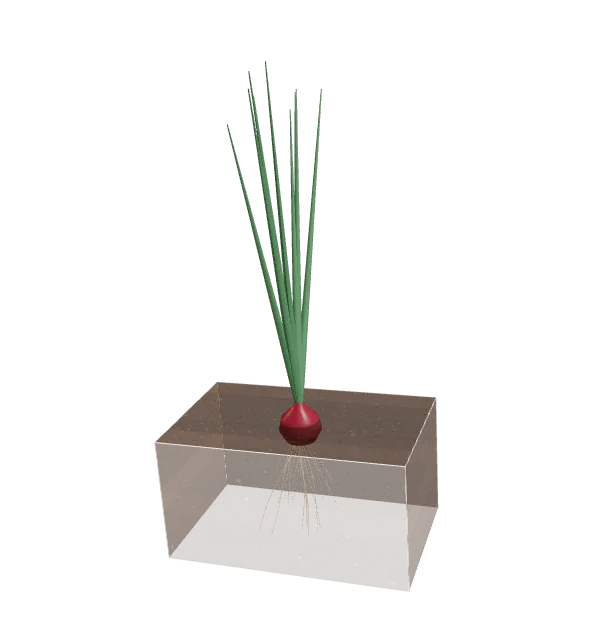
Onion plant with its roots, in a glass tank

Bulb bulking · roots shown through the soil

At a glance

Onion in one look

Leaves grow best in cool weather (13–24 °C). Bulbs form when days get longer and warmer (25–30 °C) in March–April. A long cold spell on big seedlings can make them bolt (send up a flower stalk).

Nursery sowing

15 Oct – 20 Nov

Transplanting

15 Dec – 20 Jan

Harvest

15 Apr – 31 May

160–190 days from sowing

Temperature

13–25 °C to grow

15–25 °C at sowing

Soil

Friable sandy loam or silt loam, rich in organic matter and well drained

pH 6–7.5

Seed rate

3.2–4 kg/acre

8–10 kg/ha

Spacing

15 × 10 cm

2–3 cm deep

Irrigations

10–15

3 critical stages

Yield

101–142 q/acre

250–350 q/ha

Season

AugSepOctNovDecJanFebMarAprMayJun
Grown most inMadhya PradeshRajasthanUttar PradeshBiharHaryanaPunjab

Heavy clay gives misshapen bulbs and is hard to dig. Avoid saline and waterlogged land.

Seed to harvest

Watch onion grow, stage by stage

Scroll through the season. The plant in the glass tank grows to each stage — roots and all — and every card says what the crop is doing and what you should do in the field that week.

Onion plant with its roots, in a glass tank

Stage 1 of 7

Nursery sowing

Day 0–7

  1. 1Day 0–7

    Nursery sowing

    Seeds in the raised nursery bed take up water and swell.

    Your job · Sow treated seed thinly in lines, cover with fine FYM and straw, and water lightly.

  2. 2Day 8–15

    Germination

    A thin green shoot comes up bent like a loop (the 'flag'), then straightens.

    Your job · Remove the straw cover, water lightly and watch for damping-off.

  3. 3Day 16–55

    Nursery growth and transplanting

    Seedlings grow 3–4 leaves and reach pencil thickness.

    Your job · Harden seedlings by cutting water a week before, then transplant at 15 × 10 cm and irrigate at once.

  4. 4Day 56–110

    Leaf growth

    The plant builds 8–12 leaves. Each leaf base later becomes one ring of the bulb, so more healthy leaves mean a bigger onion.

    Your job · Top-dress nitrogen at 30 and 45 days after transplanting, weed regularly and scout for thrips.

  5. 5Day 111–130

    Bulb initiation

    As days lengthen and warm up, the leaf bases begin to swell into a bulb.

    Your job · Stop nitrogen, keep soil evenly moist and spray for thrips or purple blotch if seen.

  6. 6Day 131–165

    Bulb bulking

    Bulbs grow fast and the neck starts to soften.

    Your job · Irrigate every 7–8 days and keep the field weed-free.

  7. 7Day 166–185

    Neck fall — ready to harvest

    Tops bend and fall over and leaves turn yellow. The bulb skin colours up.

    Your job · Stop irrigation 10–15 days before. Pull bulbs when about half the tops have fallen.

The seed

Good seed is half the harvest

Use certified seed of a variety bred for your region, at the right rate, and treat it before sowing.

Onion seeds, close up

One seed

≈ 3 mm

Seed rate

3.2–4 kg/acre

8–10 kg/ha

1000-seed weight

3.5 g

Recommended varieties

Punjab NaroyaPAU red onion for rabi; good yield and keeping quality.
PRO-6PAU red onion; medium-large bulbs that store well.
Punjab WhiteWhite onion suitable for dehydration and processing.
Pusa RedIARI variety, red, flattish-round bulbs; stores well.
Pusa MadhaviIARI light red variety for rabi with good storage life.
Agrifound Light RedNHRDF rabi variety, light red, good keeping quality.

Seed treatment

  1. 1Use fresh seed of the last season only — onion seed loses its life quickly.
  2. 2Treat seed with thiram or captan 2–3 g per kg, or Trichoderma 4 g per kg, against damping-off.

Raising the nursery

  1. 1About 500 m² of nursery raises seedlings for one hectare.
  2. 2Make raised beds 3 m long, 1 m wide and 15 cm high with fine soil mixed with rotted FYM.
  3. 3Sow in lines 5–7.5 cm apart and about 1 cm deep, cover with fine FYM and a thin layer of straw.
  4. 4Water lightly with a rose can; remove the straw as soon as seedlings appear.
  5. 5Avoid overwatering — it causes damping-off. Reduce water a week before transplanting to harden seedlings.
  6. 6Transplant at 6–8 weeks, when seedlings are about 15 cm tall and pencil-thick. Older seedlings bolt.

Field & sowing

Prepare the land, then sow at the right gap and depth

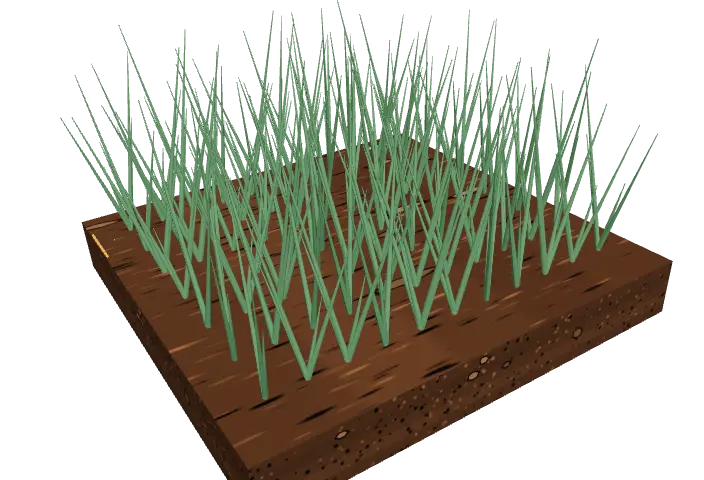
Transplanting nursery seedlings on small flat beds

A Onion field, showing rows and spacing

Layout

Flat beds

Row to row

15 cm

Plant to plant

10 cm

Depth

2–3 cm

Land preparation

  1. 1Plough 3–4 times to get a fine, loose tilth.
  2. 2Mix 20–25 tonnes of well-rotted FYM per hectare 3–4 weeks before transplanting.
  3. 3Level the field well — onion is shallow-rooted and needs even watering.
  4. 4Make beds 2–3 m wide with channels in between.

Sowing, step by step

  1. 1Make small flat beds with irrigation channels and irrigate lightly before planting.
  2. 2Dip seedling roots in a Trichoderma or fungicide solution.
  3. 3Transplant in the evening at 15 × 10 cm, 2–3 cm deep, one seedling per spot.
  4. 4Give a light irrigation right after transplanting and again 3–4 days later.

Feeding the crop

How much fertiliser, and when

These are the standard doses for a medium-fertility field. Your Soil Health Card can raise or lower them — test first, then feed.

Nutrient dose

Nitrogen (N)40 kg/acre · 100 kg/ha
Phosphorus (P₂O₅)20 kg/acre · 50 kg/ha
Potassium (K₂O)24 kg/acre · 60 kg/ha

Plus 20 t/ha (8.1 t/acre) of well-rotted farmyard manure or compost.

When to apply

  1. 1At transplanting: all phosphorus and potash and one-third of the nitrogen.
  2. 2Remaining nitrogen in two equal splits at 30 and 45 days after transplanting.
  3. 3No nitrogen after about 60 days of transplanting — it gives thick necks and poor storage.

Micronutrients, sulphur & biofertilisers

  1. 1Sulphur 30–40 kg/ha (through gypsum or single super phosphate) improves pungency, bulb size and storage.
  2. 2Zinc sulphate 25 kg/ha where the soil test shows zinc deficiency.

Bags for your field

For 1 acre of Onion

What to buy

Urea

1.5

bags · 71 kg

DAP

1

bag · 44 kg

MOP

1

bag · 40 kg

Nutrients in it: N 40 kg · P₂O₅ 20 kg · K₂O 24 kg

Also add farmyard manure or compost: 8.1 t

  • Don't put it all in at once: follow the timing on the Onion page.
  • Your Soil Health Card can raise or lower these amounts. If you have one, follow it.
  • Using SSP, NPK complexes or gypsum instead changes these amounts; the nutrient dose is what matters.

Not yet checked against a package of practices. Confirm the dose with your KVK before you buy.

Urea has 46 % N; DAP 18 % N and 46 % P₂O₅; MOP 60 % K₂O. Urea comes in 45 kg bags, DAP and MOP in 50 kg.

Water

10–15 irrigations — never miss the critical ones

A crop forgives a late irrigation at some stages and punishes it at others. These are the days that decide yield.

Day 50
Day 115
Day 140
SowingDay 190

Critical irrigations

  1. Day 50Transplanting
  2. Day 115Bulb initiation
  3. Day 140Bulb bulking

Watering tips

  1. 1Irrigate every 10–12 days in winter and every 7–8 days once it warms up in March–April.
  2. 2Keep moisture even at bulbing — dry spells followed by heavy watering cause split and double bulbs.
  3. 3Stop irrigation 10–15 days before harvest, when tops begin to fall.

Protection

Weeds, pests and diseases to watch for

Walk the field every week. Most problems are cheap to stop early and expensive to fix late. For any spray, follow the label dose and check with your KVK.

Pest

Thrips

Signs · Tiny insects hide between leaves and scrape them, leaving silvery-white streaks. Leaf tips twist and dry. Worst in warm, dry weather from February to April.

Manage · Grow two rows of maize or wheat around the field as a barrier and put up blue sticky traps. If numbers are high, spray an insecticide such as fipronil — as per label / your KVK.

Disease

Purple blotch

Signs · Small white sunken spots that turn purple with a yellow border; leaves bend and collapse. Spreads after rain and in humid weather.

Manage · Rotate crops and remove old onion debris. Spray mancozeb with a sticker every 10–15 days once spots appear — as per label / your KVK.

Disease

Stemphylium blight

Signs · Yellow to orange streaks on one side of the leaf that turn brown; leaf tips dry back.

Manage · Balanced fertiliser, good drainage and the same sprays as for purple blotch — as per label / your KVK.

Disease

Damping-off

Signs · In the nursery, seedlings rot at soil level and fall over in patches.

Manage · Use raised beds and treated seed, sow thinly and avoid overwatering. Drench with Trichoderma or a fungicide — as per label / your KVK.

Disorder

Bolting

Signs · A flower stalk shoots up before the bulb forms; bulbs stay small with a hard, hollow neck and do not store.

Manage · Use the right variety and sowing time, and transplant 6–8-week-old seedlings — not older ones. Snap off flower stalks as soon as they appear.

Disorder

Split and double bulbs

Signs · One plant forms two or more bulbs inside a common skin.

Manage · Keep irrigation regular, avoid excess nitrogen and do not transplant overage seedlings.

Weeds

Common · Bathua, motha, doob grass, wild oats and other winter weeds

  1. 1Onion has thin upright leaves and loses badly to weeds — keep the first 60 days weed-free.
  2. 2Spray oxyfluorfen or pendimethalin within 3 days of transplanting — as per label / your KVK.
  3. 3Follow up with 2–3 shallow hand weedings.

Harvest

Harvest on time, dry it well, store it safe

A good crop gives

101–142q/acre

250–350 quintal per hectare

When is it ready?

  1. 150–75% of the tops (necks) have fallen over.
  2. 2Leaves are yellowing and drying.
  3. 3Bulbs are firm and well coloured.

Harvesting

  1. 1Loosen soil with a khurpa and pull bulbs by hand.
  2. 2Lay them in rows in the field for 3–4 days, with leaves covering the bulbs so the sun does not scald them.
  3. 3Cut the tops leaving a 2–2.5 cm neck.

After harvest & storage

  1. 1Cure the bulbs in shade for 2–3 weeks until the neck is tight and dry.
  2. 2Sort out thick-necked, double, damaged and rotting bulbs, then grade by size.
  3. 3Store in a well-ventilated structure with air coming from the bottom and sides, in shallow layers, in a cool, dry place.
  4. 4A well-cured rabi crop stores 4–6 months.

Golden rules for onion

  1. 1Buy fresh seed every season — old onion seed germinates poorly.
  2. 2Transplant 6–8-week-old seedlings; overage seedlings bolt.
  3. 3Give no nitrogen after about 60 days of transplanting if you want bulbs that store.
  4. 4Stop irrigation before harvest and cure the bulbs well — most storage losses come from poor curing.
  5. 5Do not grow onion or garlic on the same field year after year.