
KhetiVidyaहिंदी
All crops

Vegetable · Brassicaceae (mustard family)

Cabbage

Patta Gobhi · पत्ता गोभी · Brassica oleracea var. capitata

Steady water and cool weather build a firm, heavy head.

Cabbage is a hardy winter vegetable that stands frost and stores well, which makes it a dependable earner across the North Indian plains. The head is a giant bud of tightly wrapped leaves; it fills best in cool, even weather with steady moisture.

Nursery sowing
1 Sep – 31 Oct
Harvest
1 Dec – 31 Mar
Duration
95–140 days
Yield
81–162 q/acre
200–400 q/ha
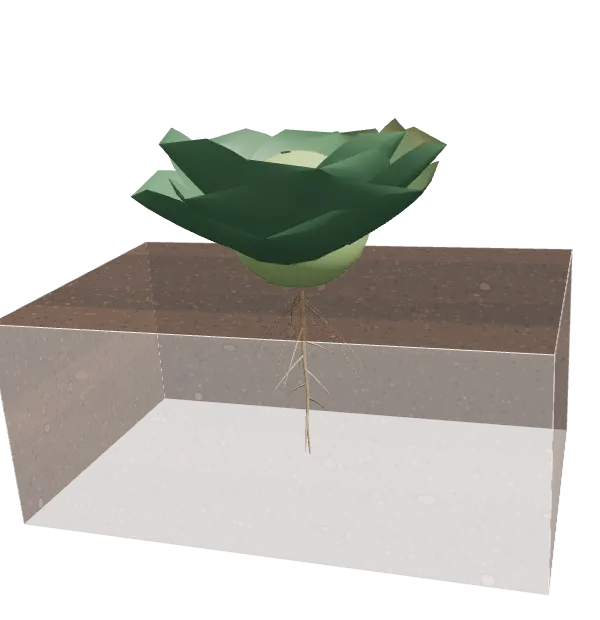
Cabbage plant with its roots, in a glass tank

Firm head · roots shown through the soil

At a glance

Cabbage in one look

Cool, humid weather gives firm heads. Cabbage takes light frost well, but a sudden hot spell makes heads loose and may send up a flower stalk.

Nursery sowing

1 Sep – 31 Oct

Transplanting

1 Oct – 1 Dec

Harvest

1 Dec – 31 Mar

95–140 days from sowing

Temperature

15–20 °C to grow

18–28 °C at sowing

Soil

Well-drained loam; early varieties on lighter sandy loam, late ones on loam to clay loam

pH 6–7

Seed rate

0.1–0.2 kg/acre

0.25–0.5 kg/ha

Spacing

45 × 45 cm

1–1.5 cm deep

Irrigations

8–12

3 critical stages

Yield

81–162 q/acre

200–400 q/ha

Season

AugSepOctNovDecJanFebMarAprMayJun
Grown most inUttar PradeshBiharHaryanaMadhya PradeshPunjab

Early types like light soils that warm quickly; late, big-headed types need soil that holds moisture.

Seed to harvest

Watch cabbage grow, stage by stage

Scroll through the season. The plant in the glass tank grows to each stage — roots and all — and every card says what the crop is doing and what you should do in the field that week.

Cabbage plant with its roots, in a glass tank

Stage 1 of 7

Nursery sowing

Day 0–5

  1. 1Day 0–5

    Nursery sowing

    Seed is sown 1 cm deep in raised beds.

    Your job · Cover lightly, mulch with straw and water gently.

  2. 2Day 5–10

    Germination

    Seed leaves emerge in 4–6 days.

    Your job · Remove the mulch and guard against damping-off.

  3. 3Day 10–35

    Seedling & transplanting

    Seedlings grow 4–5 true leaves and are transplanted at 4–6 weeks.

    Your job · Harden, transplant in the evening and irrigate at once.

  4. 4Day 35–65

    Frame leaves

    Broad outer leaves spread out — they feed the head that comes next.

    Your job · Top-dress nitrogen, hoe, earth up and irrigate.

  5. 5Day 65–80

    Head initiation

    Inner leaves start cupping and wrapping around the growing point.

    Your job · Keep watering even; scout for diamondback moth and butterfly eggs.

  6. 6Day 80–100

    Head filling

    The head swells and grows heavier as leaves pack inside.

    Your job · No sudden heavy irrigations; watch for aphids.

  7. 7Day 100–140

    Firm head

    The head feels hard and solid when pressed.

    Your job · Harvest promptly before heads split.

The seed

Good seed is half the harvest

Use certified seed of a variety bred for your region, at the right rate, and treat it before sowing.

Cabbage seeds, close up

One seed

≈ 2 mm

Seed rate

0.1–0.2 kg/acre

0.25–0.5 kg/ha

1000-seed weight

3.5 g

Recommended varieties

Golden AcreEarly; small, round, compact heads of 1–1.5 kg.
Pride of IndiaEarly to mid; round, firm heads.
Copenhagen MarketEarly; round heads, good for an early market.
Pusa MuktaMid-late; flattish heads, resistant to black rot.
Pusa DrumheadLate; large, flat heads for the main winter crop.
Pusa Cabbage Hybrid 1Early hybrid; uniform round heads.

Seed treatment

  1. 1Dip the seed in hot water at 50 °C for 30 minutes against black rot, then dry it in the shade.
  2. 2Coat with thiram or captan at 2–3 g per kg, or Trichoderma at 4–5 g per kg, against damping-off.

Raising the nursery

  1. 1Make raised beds about 3 m long, 1 m wide and 15 cm high so water never stands on the seedlings.
  2. 2Mix 2–3 baskets of well-rotted manure into each bed and level it to a fine, crumbly surface.
  3. 3About 100 m² of nursery (roughly 30 beds) raises enough plants for one hectare — that is 10–15 g of seed per bed.
  4. 4Sow thinly in lines 5–7 cm apart and 1 cm deep, cover with fine manure and a thin straw mulch, then water with a fine rose can.
  5. 5Remove the mulch as soon as seedlings appear. Water lightly and never let the beds stay soggy — wet, crowded beds bring damping-off.
  6. 6If seedlings start collapsing at soil level, drench the beds with Trichoderma or captan (2 g per litre).
  7. 7Stop watering 4–5 days before lifting to harden the plants. Transplant at 4–6 weeks old, with 4–5 true leaves.

Field & sowing

Prepare the land, then sow at the right gap and depth

Raise seedlings in a nursery, then transplant onto ridges

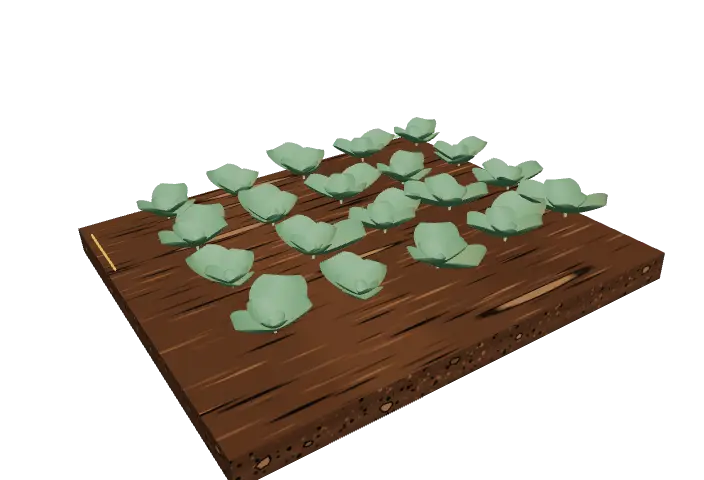
A Cabbage field, showing rows and spacing

Layout

Ridges & furrows

Row to row

45 cm

Plant to plant

45 cm

Depth

1–1.5 cm

Land preparation

  1. 1Plough 3–4 times to a fine tilth.
  2. 2Mix 20–25 tonnes of well-rotted farmyard manure per hectare into the soil.
  3. 3Level the field and make ridges with irrigation channels.
  4. 4Keep drainage open — cabbage roots rot in standing water.

Sowing, step by step

  1. 1Early varieties: 45 × 45 cm. Late, big-headed varieties: 60 × 45 cm.
  2. 2Transplant 4–6 week old seedlings in the evening.
  3. 3Plant on the side of the ridge, firm the soil around the roots and irrigate at once.
  4. 4Fill gaps within a week.

Feeding the crop

How much fertiliser, and when

These are the standard doses for a medium-fertility field. Your Soil Health Card can raise or lower them — test first, then feed.

Nutrient dose

Nitrogen (N)49 kg/acre · 120 kg/ha
Phosphorus (P₂O₅)24 kg/acre · 60 kg/ha
Potassium (K₂O)24 kg/acre · 60 kg/ha

Plus 25 t/ha (10 t/acre) of well-rotted farmyard manure or compost.

When to apply

  1. 1At transplanting: half the nitrogen with all the phosphorus and potash.
  2. 2Top-dress the remaining nitrogen in two doses, 30 and 45 days after transplanting, with earthing up.

Micronutrients, sulphur & biofertilisers

  1. 1Boron: in boron-poor soils, 10 kg borax per hectare before transplanting prevents hollow, brown stems.

Bags for your field

For 1 acre of Cabbage

What to buy

Urea

2

bags · 85 kg

DAP

1

bag · 53 kg

MOP

1

bag · 40 kg

Nutrients in it: N 49 kg · P₂O₅ 24 kg · K₂O 24 kg

Also add farmyard manure or compost: 10 t

  • Don't put it all in at once: follow the timing on the Cabbage page.
  • Your Soil Health Card can raise or lower these amounts. If you have one, follow it.
  • Using SSP, NPK complexes or gypsum instead changes these amounts; the nutrient dose is what matters.

Not yet checked against a package of practices. Confirm the dose with your KVK before you buy.

Urea has 46 % N; DAP 18 % N and 46 % P₂O₅; MOP 60 % K₂O. Urea comes in 45 kg bags, DAP and MOP in 50 kg.

Water

8–12 irrigations — never miss the critical ones

A crop forgives a late irrigation at some stages and punishes it at others. These are the days that decide yield.

Day 35
Day 65
Day 85
SowingDay 140

Critical irrigations

  1. Day 35Just after transplanting
  2. Day 65Head initiation
  3. Day 85Head filling

Watering tips

  1. 1Irrigate every 8–10 days early on and every 12–15 days in the cold months.
  2. 2Keep moisture even while heads fill. A heavy watering after a dry spell splits heads.
  3. 3Stop irrigating a few days before harvest.

Protection

Weeds, pests and diseases to watch for

Walk the field every week. Most problems are cheap to stop early and expensive to fix late. For any spray, follow the label dose and check with your KVK.

Pest

Diamondback moth

Signs · Small green caterpillars make windows and holes in leaves and bore into the head.

Manage · Mustard trap crop (2 rows after every 25 rows), pheromone traps and Bt or neem seed kernel extract sprays. For heavy attacks, spinosad or chlorantraniliprole — as per label / your KVK.

Pest

Cabbage butterfly

Signs · Clusters of yellow eggs under leaves; groups of hairy yellow-green caterpillars strip leaves to the veins (December–March).

Manage · Pick off egg clusters and young caterpillar groups by hand. Spray Bt or neem early; use a recommended insecticide only if needed — as per label / your KVK.

Pest

Aphids

Signs · Grey-green insects in colonies on leaves and between head leaves; sticky, curled leaves.

Manage · Yellow sticky traps and neem oil first; imidacloprid or thiamethoxam if colonies spread — as per label / your KVK, with the waiting period.

Disease

Black rot

Signs · V-shaped yellow patches from leaf edges with black veins; heads rot.

Manage · Hot-water treat seed, grow resistant Pusa Mukta, rotate away from cabbage-family crops for 2–3 years and remove sick plants.

Disease

Alternaria leaf spot

Signs · Brown spots with target-like rings on outer leaves.

Manage · Clean seed and rotation; spray mancozeb at 2.5 g per litre at first spots — as per label / your KVK.

Disease

Damping-off

Signs · Nursery seedlings rot at the soil line and fall over in patches.

Manage · Raised beds, thin sowing, treated seed, light watering and a Trichoderma or captan drench.

Disorder

Head splitting

Signs · Mature heads crack open, often after rain or a heavy irrigation.

Manage · Water evenly and harvest on time. If you must delay, twist the plant or cut roots on one side with a spade to slow water uptake.

Weeds

Common · Bathua (Chenopodium), krishneel (Anagallis), gajri (Fumaria), motha (Cyperus)

  1. 1Hoe 2–3 times in the first 6 weeks and earth up with the last hoeing.
  2. 2Pendimethalin before transplanting controls early weeds — as per label / your KVK.

Harvest

Harvest on time, dry it well, store it safe

A good crop gives

81–162q/acre

200–400 quintal per hectare

Early varieties give 200–300 q; late big-headed ones can cross 400 q.

When is it ready?

  1. 1The head feels firm and solid when pressed with the thumb.
  2. 2It has reached the size typical of the variety.
  3. 3Wrapper leaves look glossy and tight.

Harvesting

  1. 1Cut the stem with a sharp knife, keeping 2–3 wrapper leaves to protect the head.
  2. 2Harvest in the cool morning and keep heads in the shade.

After harvest & storage

  1. 1Grade by size and firmness; pack in crates or net bags.
  2. 2Heads keep 3–6 weeks at 0–1 °C and high humidity.

Golden rules for cabbage

  1. 1Uneven watering is the main cause of split heads.
  2. 2Grow mustard as a trap crop for diamondback moth.
  3. 3Pick egg clusters of the cabbage butterfly by hand — it is cheap and works.
  4. 4Stagger nursery sowings to spread harvest and get better prices.