Pest
Head borer (Helicoverpa)
Signs · Green-brown caterpillars bore into the back and face of the head; holes and droppings.
Manage · Hand-pick larvae; bird perches; spray as per label / your KVK when larvae are seen on heads.
Oilseed · Asteraceae (sunflower family)
Surajmukhi · सूरजमुखी · Helianthus annuus
The spring crop — sown at the tail of winter, harvested before the monsoon.
In Punjab, Haryana and western UP sunflower is grown as a spring crop: sown in late January–February after potato, toria or sugarcane and harvested in May–June. Hybrids give high oil yield in about 100 days, but the crop needs regular irrigation in the hot months and bees for good seed set.
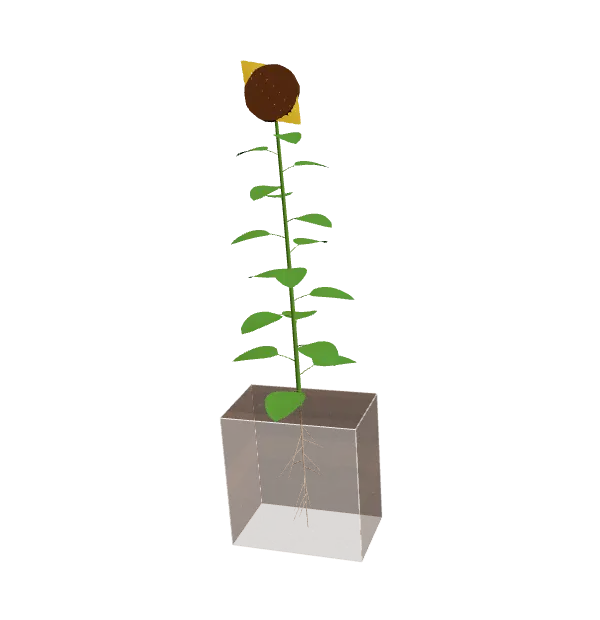
Flowering · roots shown through the soil
At a glance
Seed needs soil warmer than about 10°C to germinate, so sow after the hard cold. Temperatures above about 38°C at flowering reduce seed set; harvest before the monsoon rains.
Sowing time
20 Jan – 15 Feb
Harvest
15 May – 10 Jun
95–115 days from sowing
Temperature
20–30 °C to grow
10–25 °C at sowing
Soil
Well-drained loam to clay loam
pH 6.5–8
Seed rate
2–2.4 kg/acre
5–6 kg/ha
Spacing
60 × 30 cm
3–5 cm deep
Irrigations
6–9
3 critical stages
Yield
7.3–10 q/acre
18–25 q/ha
Season
Tolerates mild salinity but not waterlogging.
Seed to harvest
Scroll through the season. The plant in the glass tank grows to each stage — roots and all — and every card says what the crop is doing and what you should do in the field that week.
Stage 1 of 7
Sowing
Day 0–3
Seed is dibbled into the warm south side of the ridge.
Your job · Two seeds per spot, 3–5 cm deep; pre-emergence weedicide.
Seedlings push up two thick seed leaves; cold soil slows this down.
Your job · Fill gaps quickly with extra seed.
Pairs of rough, heart-shaped leaves form.
Your job · Thin to one plant per spot; first hoeing.
The stem thickens and a small star-shaped bud appears at the top.
Your job · Top-dress nitrogen, earth up and irrigate.
The head opens: yellow ray petals outside, hundreds of tiny florets inside opening from the rim inward.
Your job · Bee boxes, borax spray, irrigation every 8–10 days.
Seeds fill with oil; the heavy head bends down.
Your job · Irrigate, guard against birds and head borer.
Back of the head turns lemon-yellow to brown and the bracts dry.
Your job · Stop irrigation and harvest before the monsoon.
The seed
Use certified seed of a variety bred for your region, at the right rate, and treat it before sowing.
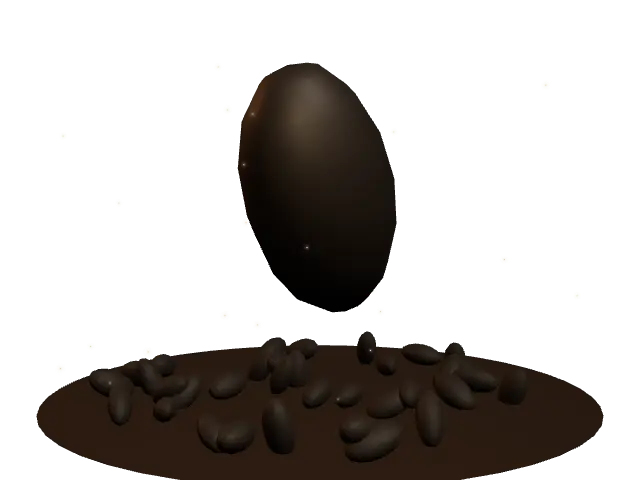
One seed
≈ 11 mm
Seed rate
2–2.4 kg/acre
5–6 kg/ha
1000-seed weight
—
Field & sowing
Dibbling on the south side of east–west ridges
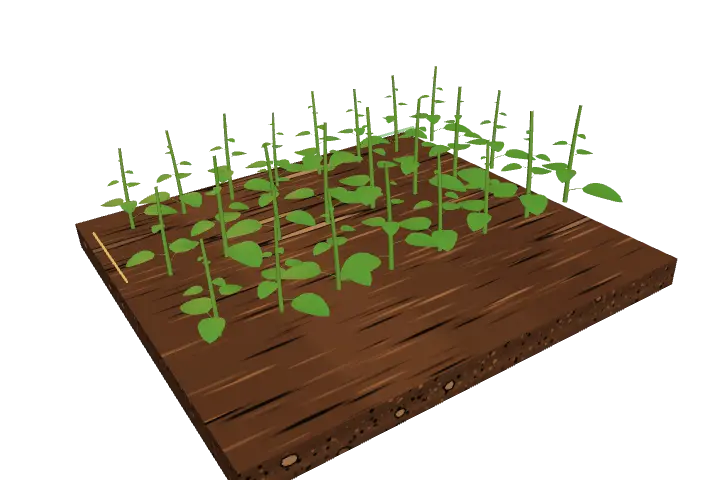
Layout
Ridges & furrows
Row to row
60 cm
Plant to plant
30 cm
Depth
3–5 cm
Feeding the crop
These are the standard doses for a medium-fertility field. Your Soil Health Card can raise or lower them — test first, then feed.
Nutrient dose
Plus 8 t/ha (3.2 t/acre) of well-rotted farmyard manure or compost.
For 1 acre of Sunflower
What to buy
Urea
1
bag · 39 kg
DAP
0.5
bags · 35 kg
MOP
0.5
bags · 20 kg
Nutrients in it: N 24 kg · P₂O₅ 16 kg · K₂O 12 kg
Also add farmyard manure or compost: 3.2 t
Not yet checked against a package of practices. Confirm the dose with your KVK before you buy.
Urea has 46 % N; DAP 18 % N and 46 % P₂O₅; MOP 60 % K₂O. Urea comes in 45 kg bags, DAP and MOP in 50 kg.
Water
A crop forgives a late irrigation at some stages and punishes it at others. These are the days that decide yield.
Protection
Walk the field every week. Most problems are cheap to stop early and expensive to fix late. For any spray, follow the label dose and check with your KVK.
Signs · Green-brown caterpillars bore into the back and face of the head; holes and droppings.
Manage · Hand-pick larvae; bird perches; spray as per label / your KVK when larvae are seen on heads.
Signs · Leaf edges turn yellow, then brown, and curl downward.
Manage · Spray only when damage spreads, as per label / your KVK.
Signs · Seeds picked out of maturing heads, especially along field borders.
Manage · Scare birds in the morning and evening during seed filling; sow in a block with neighbours rather than a small isolated plot.
Signs · Dark brown spots with yellow halos on leaves, stems and the back of the head.
Manage · Seed treatment; mancozeb spray at first spots, as per label / your KVK.
Signs · Soft, brown, water-soaked patches on the back of the head after injury and rain.
Manage · Control head borer (wounds let rot in); avoid overhead irrigation; remove rotten heads.
Signs · Centre of the head stays empty or with chaffy seeds.
Manage · Keep 2–5 bee boxes per hectare, borax spray at ray-floret opening, and never stress the crop at flowering. Gently rub heads together with a cloth in the morning if bees are few.
Common · Bathua, itsit, motha and grasses
Harvest
A good crop gives
7.3–10q/acre
18–25 quintal per hectare
Hybrid seed holds about 38–42% oil.